
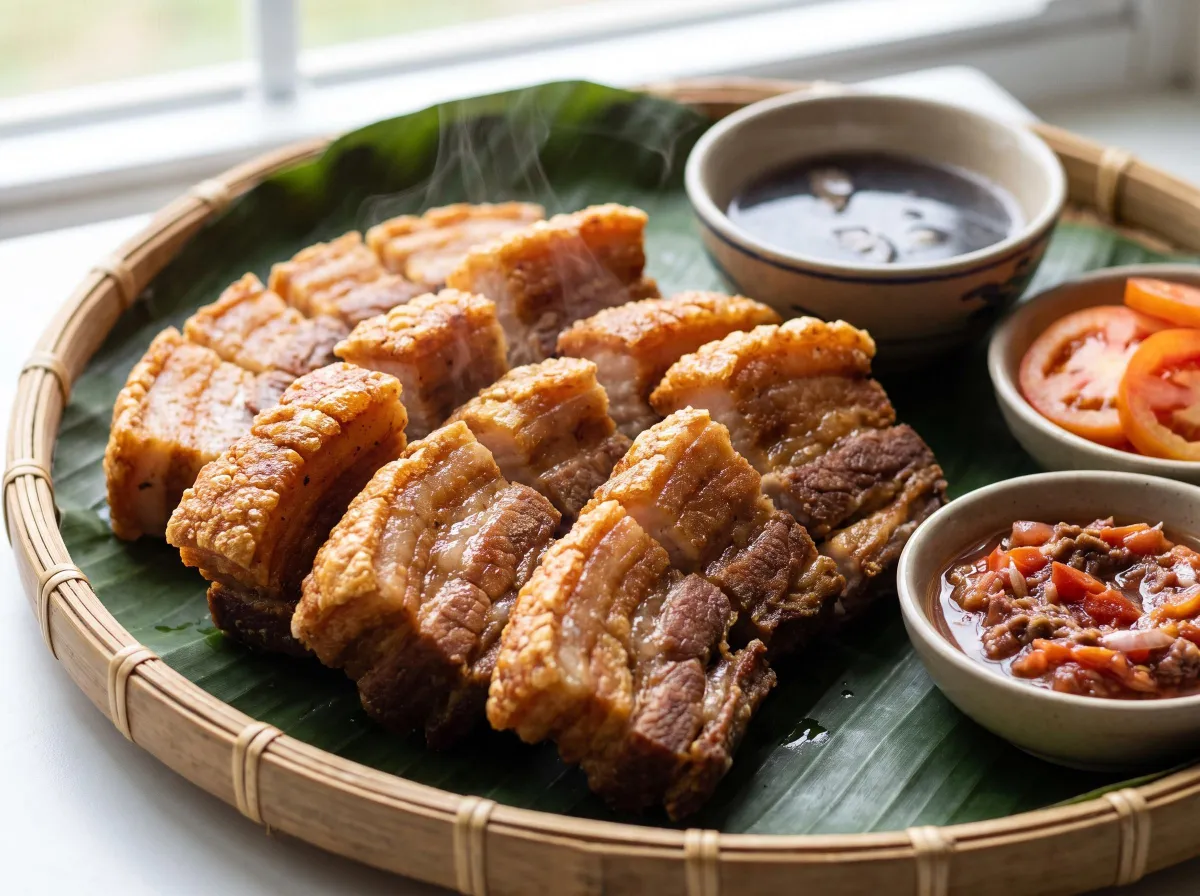
What Is Bagnet? Ilocano Crispy Pork Belly (and Why It’s Not Just “Crispy Pata, But Belly”)
Bagnet Ilocano-style crispy pork belly—usually simmered until tender, dried, then deep-fried so the skin turns blistered and crunchy while the meat stays rich and juicy. If you’ve seen it described as “Ilocos crispy pata,” you’re close… but not quite there.
Because bagnet isn’t trying to be crispy pata. It’s doing its own thing—and Ilocanos (including many in the diaspora) are right to be proud of it.
In this guide, you’ll learn what bagnet is, why it matters, how it’s traditionally made, how to spot an authentic version, and the real difference between bagnet vs crispy pata (a debate that shows up constantly in search bars for a reason).
Why bagnet is having a moment
Some foods go viral because they’re new. Bagnet goes viral because it's loud—visually and texturally.
If you’ve ever watched a knife crack through pork skin that looks like golden glass, you already get the hype. Bagnet is the kind of dish that turns a normal meal into an event. It’s also the kind of dish that gets mislabeled fast:
“Isn’t that just lechon kawali?”
“So it’s crispy pata, right?”
“Is bagnet Filipino chicharrón?”
Those are fair questions. But bagnet has a specific identity tied to Ilocos—and when you understand the technique (not just the crunch), the difference becomes obvious.
So, what is bagnet?
Bagnet (often described as Ilocano crispy pork belly) is a dish made by taking pork belly and cooking it in a way that produces:
Super-crispy, blistered skin
Rendered fat that feels rich, not greasy
Tender meat that doesn’t dry out
The most common traditional approach is the two-phase method:
Simmer/boil pork belly with aromatics until tender (and to season it throughout)
Dry thoroughly (air-dry, chill uncovered, or sun/air exposure—more on this later)
Deep-fry until the skin turns deeply crisp and crackly
Often: fry again re-crisp right before serving (especially in restaurants)
You’ll see bagnet served as thick slices or chunks—sometimes as the main star with rice, sometimes chopped and tossed into other Ilocano favorites (bagnet kare-kare, bagnet pinakbet, bagnet sisig-style adaptations, and more).
If you want a quick “one-liner” definition for your brain:
Bagnet is Ilocano pork belly that’s tenderized first, then dried and fried for ultra-crisp crackling—crispy pata’s regional cousin, but with belly (not leg) and a different texture goal.
Bagnet’s “story” (without made-up anecdotes)
Let’s tell the story the honest way: not as a fictional “I tried it once and cried tears of joy” moment, but as something you can see in real life across communities.
Bagnet is tied to Ilocos Norte and Ilocos Sur, places that are strongly represented in Filipino migration patterns. When Ilocano families move—within the Philippines or abroad—food becomes one of the easiest ways to keep identity present. Bagnet is a natural “pride dish” because it’s:
unmistakable on a table
technical enough to feel special
deeply satisfying with simple condiments
easy to pair with rice and vegetables
In many Filipino communities outside the Philippines, you’ll see bagnet show up in restaurants that want a regional anchor—something that says:this isn’t generic; this is Ilocos.
And that leads straight into the big debate.
Bagnet vs crispy pata (the debate, and my stance)
The debate
Search engines see this question constantly: "difference between bagnet and crispy pata”.
The confusion makes sense. Both are Filipino crispy pork dishes. Both are often served with vinegar dips. Both can make a table go quiet for a second because everyone’s busy crunching.
But here’s the real disagreement underneath the question:
Side A: "They're basically the same—crispy pork is crispy pork.”
Side B: "No. Bagnet is its own Ilocano technique and identity. Calling it crispy pata is lazy.”
Editorial stance (clear and opinionated)
Bagnet deserves to be treated as its own dish—not a substitute label for crispy pata.
Here’s why: if you describe bagnet as “Ilocos crispy pata,” you erase two important things:
The cut matters. Bagnet is typically pork belly; crispy pata is pork leg/hock (pata). Different fat structure, different chew, different ideal crispness.
The texture target is different. Great bagnet skin is blistered and crackly in a way that’s closer to crackling-style pork belly. Crispy pata often has a thicker skin and a different bite because of the leg’s structure.
So yes—bagnet can be your “crispy centerpiece” the way crispy pata is. But it’s not a copy. It’s Ilocos answering a universal question: How crispy can pork get?
Bagnet vs lechon kawali: close cousins
If crispy pata is bagnet’s “regional debate rival,” lechon kawali is bagnet’s “family resemblance” topic.
Lechon kawali is also deep-fried pork (often belly), usually cooked until tender and fried until crisp. So why isn’t bagnet just lechon kawali?
Because bagnet is typically more deliberate about drying and crisping the skin—and it often aims for a more intense crackle. Many bagnet versions also feel “meatier” in cut and presentation (thicker slabs), and the seasoning/aromatics can skew Ilocano (especially when paired with sukang Iloco).
If you’re choosing language for a menu or a blog:
If it’s belly, fried crisp: lechon kawali could be accurate.
If it’s Ilocos-identified, crackling-forward, often twice-fried: bagnet is the better name.
What makes bagnet genuinely authentic (and what doesn’t)
Let’s get practical. “Authentic” can be a messy word, but it’s still useful when it refers to method, intent, and context—not gatekeeping.
What makes bagnet genuinely authentic
An authentic-leaning bagnet usually checks most of these boxes:
Correct cut: pork belly
Bagnet is about the belly’s layers: skin, fat, meat.
Tenderizing step before frying
Traditionally simmered/boiled until tender (not just raw-fried).
Drying step
This is a big one. Drying helps the skin blister and prevents oil splatter.
Deep-frying (not just baking)
Air-frying can be delicious, but it typically won’t produce the same all-over crackle as deep-frying.
Ilocano pairing and presentation
Served with sukang Iloco (cane vinegar common in the region), rice, and often Ilocano vegetable dishes.
What makes a bagnet “not authentic” (or at least “bagnet-inspired”)
These versions can still taste good, but they’re a different dish:
Skipping the simmer/boiling and frying raw belly until cooked
Skipping drying, leading to leathery skin or inconsistent blistering
Calling any crispy pork belly “bagnet” with zero Ilocos context (it’s not illegal—it’s just inaccurate branding)
Using thin belly slices meant for quick frying (more like chicharrón-style bites)
A fair way to label it (especially for restaurants)
If you’re not using the traditional method, “bagnet-style crispy pork belly” is a respectful compromise. It signals inspiration without claiming full tradition.
How to cook bagnet at home (authentic-leaning method)
Below is a home-friendly method that aims for authentic results while staying realistic for a normal kitchen.
Ingredients
1.5 to 2 kg pork belly, skin-on (whole slab is easiest)
Water (for simmering)
1–2 tbsp salt (plus more to taste)
1 tsp whole black peppercorns
4–6 cloves garlic, smashed
2–3 bay leaves (optional but common in Filipino pork simmering)
Oil for deep-frying (enough for 2–3 inches depth)
Optional (for extra crisp skin):
1–2 tbsp vinegar in the simmering liquid (helps reduce funk and can slightly tighten skin)
A wire rack + tray for drying
A fan or fridge space for uncovered chilling
Equipment
Large pot for simmering
Deep pot or wok for frying
Thermometer (helpful for oil temp and doneness)
Wire rack (for draining and crisping)
Step 1: Simmer until tender
Place pork belly in a pot. Add water to cover.
Add salt, peppercorns, garlic, and bay leaves.
Bring to a boil, then reduce to a simmer.
Simmer until tender—typically 45–75 minutes, depending on thickness.
You’re looking for: a knife slides in with some resistance, but it’s not falling apart.
Food safety note: For pork, USDA guidance lists 145°F / 63°C with a rest for whole cuts, but simmering typically takes the meat higher than that anyway. Use doneness as “tender enough to fry-crisp without drying out.” (Reference below.)
Step 2: Dry thoroughly (this is where bagnet wins)
Remove pork and let it cool.
Pat dry aggressively with paper towels.
Place on a rack, uncovered.
Best options:
Refrigerate uncovered overnight (excellent for drying skin)
Air-dry 4–8 hours in a cool, safe environment
Dry skin = better blistering and less dangerous splatter.
Step 3: First fry (set the crust)
Heat oil to around 350°F / 175°C.
Carefully lower the pork belly in (skin-side down first can help start blistering, but do what feels safest).
Fry until the exterior is golden and the skin begins to blister—about 8–15 minutes depending on size.
Remove and rest on a rack.
Step 4: Second fry (the signature crunch)
Shortly before serving:
Bring oil back to 375°F / 190°C.
Fry again for 3–7 minutes until deeply golden and audibly crisp.
Rest 5–10 minutes, then chop into chunks or slice.
Dipping sauce (simple, Ilocos-friendly)
Cane vinegar (sukang Iloco if available)
Minced garlic
Sliced chili
Optional: a pinch of salt or a tiny pinch of sugar
How Ilocanos serve bagnet (and what to dip it in)
Bagnet is rich. The best pairings balance it with acid, bite, and something vegetal.
Classic ways to serve
Bagnet + rice + sukang Iloco (the “let the crunch speak” approach)
With pinakbet (vegetables + bagoong; bagnet adds crispy richness)
With dinengdeng (vegetable soup/stew—lighter, brothy contrast)
As a topping or add-in to noodle/rice meals (modern restaurant style)
The condiment that makes it feel Ilocos
If there’s one detail that instantly pushes bagnet into “Ilocano-coded,” it’s the vinegar.
Look for canne vinegar and label it as:
sukang Iloco / sukang Iloko
sugarcane vinegar
That sharp, clean acidity is the perfect counterpoint to belly fat.
Where to eat bagnet in Ilocos (GEO tips)
If you’re traveling (or building a food crawl list), bagnet is most strongly associated with Ilocos Norte and Ilocos Sur.
Places (regions) to anchor your search
Laoag City (Ilocos Norte)– use searches like “bagnet Laoag”
Vigan City (Ilocos Sur)– use “bagnet Vigan” and explore nearby restaurants
San Nicolas / Batac area– often part of Ilocos food routes
Tip for better results: search "bagnet + pinakbet" or "bagnet + sukang Iloco" to find places that serve it in a more region-rooted way, not just as generic crispy pork.
If you’re outside the Philippines (diaspora tip): try searching "Ilocano restaurant" first, then check menus for bagnet.
Keep exploring Filipino food and culture with us:
👉 What Filipino Food Are You? Take the quiz →
👉 Get your FREE Filipino Coloring pages here.
🎨 Get our Filipino Food Activity Book on Amazon
📚 Read more Filipino food stories on our blog
FAQ: bagnet questions people actually ask
What is bagnet in English?
Bagnet is commonly described as Ilocano crispy pork belly—pork belly that’s cooked until tender, then deep-fried until the skin is crackly and crisp.
What’s the difference between bagnet and crispy pata?
Bagnet uses pork belly and focuses on crackling-style crisp skin over layered fat and meat.
Crispy pata uses pork leg/hock has a different texture due to collagen and thicker skin.
Is bagnet the same as lechon kawali?
They’re similar, but bagnet typically emphasizes drying and extra-crackly skin and carries a stronger Ilocos identity. Lechon kawali is broader and more general.
Can I air-fry bagnet?
You can bagnet-style crispy pork belly in an air fryer, and it can taste great. But if you want the classic blistered crackle and all-over crunch,deep-frying is closer to traditional results.
How do I keep bagnet crispy?
Drain on a wire rack, not paper towels (paper traps steam).
Slice only when ready to serve.
Re-crisp in an oven (around 400°F / 200°C) for 8–12 minutes, or do a quick second fry.
What’s the best vinegar for bagnet?
Sugarcane vinegar (often sold as sukang Iloco/Iloko) is a top match. Garlic + chili turns it into an ideal dipping sauce.
References
Clickable references used for background, definitions, and safety guidance:
Wikipedia overview (general reference):Bagnet
Pork doneness and food safety (USDA):USDA: Pork from Farm to Table
Filipino cooking method parallels (lechon kawali baseline technique):Kawaling Pinoy – Lechon Kawali
Another common Filipino home method reference:Panlasang Pinoy – Lechon Kawali
Regional travel context (official tourism hub):Philippines Department of Tourism