
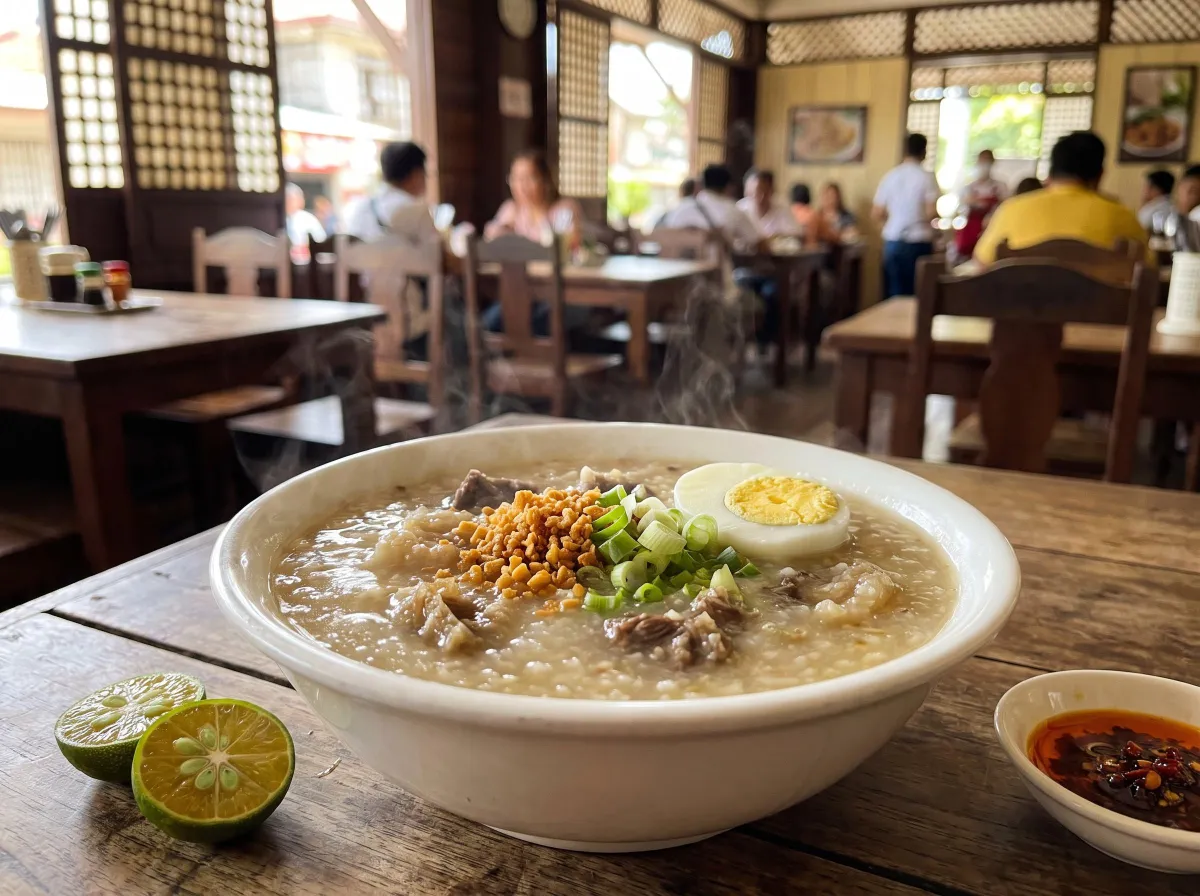
What is Goto? The Filipino Beef Tripe Congee That Conquers Midnight Cravings
Picture this: It's 2 AM in Manila, and the streets are still alive with the hum of tricycles and the chatter of night owls. Among the fluorescent-lit food stalls that dot the corners, there's always one dish that draws a crowd—a steaming pot of thick, gingery rice porridge studded with tender pieces of beef tripe. That, my friends, isGoto (pronounced "goh-toh"), and it's about to become your new obsession.
If you've ever wondered what Filipinos reach for when they need serious comfort—whether after a long night out, during rainy season blues, or when fighting off a cold—Goto is often the answer. But what exactly is this mysterious congee, and why does it hold such a special place in Filipino food culture?
Buckle up, because we're about to take a deep dive into one of the Philippines' most beloved rice porridge dishes.
The Basics: What Exactly is Goto?
At its core,Goto is a Filipino rice porridge (congee) made primarily with beef tripe and intestines, slow-cooked with rice until it breaks down into a thick, creamy consistency. The dish gets its distinctive flavor from generous amounts of ginger, garlic, and often a splash of fish sauce or patis.
The name "Goto" actually comes from the Hokkien Chinese word for tripe (牛肚, "gû-tō"), which makes perfect sense given the dish's Chinese culinary influences mixed with Filipino cooking sensibilities. Like many Filipino dishes, Goto represents that beautiful fusion of cultures that defines Philippine cuisine.
Unlike plain rice porridge, Goto is:
Savory and robust, not bland or neutral
Protein-rich from the beef organs
Aromatic with ginger and garlic doing the heavy lifting
Textured, with tender, chewy pieces of tripe throughout
The consistency should be thick enough to coat the back of a spoon, but still pourable—not quite a stew, but heartier than a soup.
The Great Filipino Porridge Debate: Goto vs. Lugaw vs. Arroz Caldo
Here's where things get interesting, and frankly, where Filipino food enthusiasts can get surprisingly passionate. There's an ongoing culinary debate about the distinctions between the Philippines' three major rice porridges: Goto, Lugaw, and Arroz Caldo.
Some argue they're all basically the same thing with minor variations. Others (myself included) believe these distinctions matter—not just for accuracy, but because each dish occupies its own niche in Filipino food culture.
The Real Differences That Actually Matter
Lugaw is the umbrella term for any Filipino rice porridge. It's the plain base—rice cooked with lots of water until it breaks down into that characteristic thick, creamy consistency. Think of it as the blank canvas. Lugaw can be served plain (often for sick people or babies) or topped with various ingredients. The word comes from Hokkien "lô-kuh," meaning "mixed together until confused."
Arroz Caldotakes that lugaw base and adds chicken (usually bone-in pieces), ginger, garlic, and saffron or kasubha (safflower) for that distinctive yellow color. The name literally translates to "hot rice" from Spanish, and the dish reflects more of the Hispanic influence on Filipino cuisine. It's often considered the "gateway" porridge—milder, more approachable, especially for kids and the elderly.
Goto, meanwhile, is lugaw's bolder, more adventurous cousin. It specifically features beef tripe and intestines, giving it a richer, deeper flavor profile and a more complex texture. The broth tends to be darker and more robust than Arroz Caldo's golden hue.
Why This Distinction Actually Matters
The debate isn't just semantic hairsplitting. These differences reflect important cultural contexts:
Regional preferences matter: In some provinces, all rice porridge might be called lugaw regardless of ingredients. In Metro Manila and urban centers, the distinctions are more strictly observed. When you order Goto at a 24-hour goto-an, you're expecting tripe—and you'd be rightfully disappointed to receive chicken instead.
Culinary intention matters: A vendor specializing in Goto isn't just making rice porridge with whatever's available. They're specifically sourcing, cleaning, and preparing beef intestines and tripe—a labor-intensive process that requires skill and knowledge. This isn't interchangeable with throwing chicken in a pot.
Cultural identity matters: For many Filipino OFWs (Overseas Filipino Workers), these specific dishes carry distinct memories and meanings. Goto might remind someone of late-night meals with friends in Manila, while Arroz Caldo brings back memories of a mother's care during childhood illnesses. Conflating them erases those specific cultural touchstones.
The stance worth taking: Yes, they're all lugaw-family rice porridges, but Goto, Arroz Caldo, and plain Lugaw are distinct enough preparations that the names shouldn't be used interchangeably.The differences in protein, preparation time, flavor profiles, and cultural contexts make each worthy of its own identity.
The Anatomy of a Perfect Bowl of Goto
What transforms a pot of rice and tripe into the soul-warming dish that Filipinos crave? Let's break it down.
The Essential Components
1. The Rice Base
Goto starts with ordinary white rice (usually malagkit or glutinous rice, though regular rice works too) cooked with far more water than normal—we're talking a 1:8 or even 1:10 rice-to-water ratio. The rice is simmered for a long time until the grains completely break down, releasing their starches and creating that signature thick, creamy consistency. Some cooks add a bit of chicken or beef stock instead of plain water for extra depth.
2. The Star: Beef Tripe and Intestines
This is where Goto gets its character. The beef tripe (the stomach lining) and small intestines are thoroughly cleaned (a crucial step that can take hours), then simmered until tender. Done right, the tripe should be soft enough to bite through easily but still retain a pleasant, slight chewiness—never rubbery, never mushy. The intestines add richness to the broth as they cook down.
3. The Aromatics
Generous amounts of fresh ginger (some recipes use as much as a whole hand of ginger for one pot) and garlic form the aromatic backbone. The ginger provides warmth and helps cut through the richness of the organs, while garlic adds savory depth.
4. The Seasoning
Fish sauce (patis), salt, and pepper do most of the heavy lifting. Some recipes add a touch of soy sauce or annatto seeds (atsuete) for color and a subtle earthy flavor. The broth should taste well-seasoned but not overpowering—balanced and savory with a gentle ginger warmth.
The Crucial Garnishes
Here's where Goto really comes alive. A bowl of Goto is never complete without its toppings:
Crispy fried garlic (toasted until golden and aromatic)
Sliced green onions or scallions (for freshness and bite)
Hard-boiled eggs (usually cut in half, the yolk adding richness when mashed into the porridge)
Chicharrón (crushed pork rinds for textural contrast)
Calamansi or lemon (the acidic brightness cuts through the richness)
Fish sauce and chili (usually served on the side for individual adjustment)
The contrast between the smooth, warm porridge and the crunchy garlic and chicharrón creates a textural experience that's absolutely addictive.
Where and When Filipinos Eat Goto
The Late-Night Goto-an Culture
One of Goto's most iconic contexts is the24-hour goto-an—specialized eateries that serve nothing but rice porridge, often operating late into the night or around the clock. These establishments are Filipino institutions, especially in urban areas.
The typical goto-an scene:
Fluorescent lighting that's somehow both harsh and comforting
Stainless steel tables and benches
Large, steaming pots visible from the street
A mix of customers: taxi drivers on break, students pulling all-nighters, office workers after late shifts, groups of friends after a night out, and early risers starting their day before dawn
These places serve a crucial social function. They're democratic spaces where executives sit elbow-to-elbow with construction workers, all united by the desire for a hot, satisfying bowl of congee.
The Comfort Food Context
Goto occupies several important niches in Filipino food culture:
Hangover cure: The combination of warm, easily digestible food, hydration from the broth, ginger's stomach-soothing properties, and substantial protein makes Goto a popular choice after a night of drinking. It's the Filipino equivalent of pho for hangovers.
Cold and flu remedy: Like chicken soup in Western cultures, Goto (and its cousins Lugaw and Arroz Caldo) is what Filipino mothers and grandmothers turn to when someone's under the weather. The ginger helps with nausea and provides warmth, while the soft texture is easy on upset stomachs.
Rainy day staple: When typhoon rains keep everyone indoors and the weather turns cold (by tropical standards), Filipinos instinctively crave Goto. Something about the warm, gingery broth feels perfect for gray, wet weather.
Economic comfort: Goto is relatively affordable and filling, making it accessible across economic classes. A bowl can cost anywhere from ₱30-₱80 (roughly $0.50-$1.50 USD), providing substantial nutrition for the price.
The OFW Connection: Goto as Emotional Anchor
For the millions of Overseas Filipino Workers scattered across the globe, food becomes more than sustenance—it's a lifeline to home, identity, and belonging. And Goto, specifically, holds a special place in the OFW comfort food hierarchy.
Why Goto Resonates with Filipinos Abroad
It's distinctly Filipino: Unlike adobo or pancit, which have clear cousins in other Asian cuisines, Goto's specific combination of ingredients and preparation is recognizably Filipino. You can find congee and rice porridge across Asia, but the Filipino version with its specific tripe preparation, ginger-forward profile, and particular garnishes is unique.
It's hard to replicate abroad: The specific cuts of beef tripe, the right balance of aromatics, and especially the garnishes (try finding good chicharrón in rural Norway) make authentic Goto difficult to recreate in many overseas locations. This scarcity increases its value as comfort food.
It's associated with specific memories: For many OFWs, Goto connects to memories of late nights in Manila, early morning markets, or specific family traditions that can't be replicated abroad.
When Filipino communities abroad gather for potlucks or when Filipino restaurants in foreign cities feature Goto on the menu, it's never just about feeding hunger—it's about feeding homesickness, maintaining connection, and preserving cultural identity.
How to Eat Goto Like a Filipino
There's an art to maximizing your Goto experience. Here's the insider approach:
The Build-Your-Own-Bowl Method
Most goto-ans serve the porridge in a bowl with some tripe already mixed in, but the garnishes come separately. The ritual goes like this:
Start with the base: Take your bowl of hot Goto
Add the egg: Place your halved hard-boiled egg in the porridge
Layer the crunch: Generously add crispy garlic and green onions
Add chicharrón: Crush the pork rinds over the top (some people add it gradually to maintain crispness)
Squeeze calamansi: Add as much citrus as you like—the acid brightens everything
Season to taste: Add more patis (fish sauce) if you want it saltier, and chili if you want heat
Mash and mix: Many people partially mash the egg yolk into the porridge for extra richness
The Eating Technique
Unlike soup, which you might sip, Goto is eaten with a spoon almost like a very wet rice dish. Take spoonfuls that include a bit of everything—the creamy porridge, a piece of tripe, some egg, and those crucial crunchy garnishes.
The textural contrast is everything: each bite should have creamy smoothness from the rice, tender chewiness from the tripe, and satisfying crunch from the garlic and chicharrón.
The Pairing
Goto is often enjoyed with:
Tokwa't baboy(fried tofu and pork in a soy-vinegar sauce)
Lumpiang shanghai(Filipino spring rolls)
Extra chicharrónon the side
Hot calamansi or ginger teato drink
The Health Question: Is Goto Good for You?
Let's address the elephant—or rather, the cow's stomach—in the room.
The Nutritional Reality
Beef tripe and intestines are organ meats, which come with both benefits and considerations:
Potential Benefits:
High in protein: Organ meats are protein-dense
Rich in certain nutrients: Tripe contains zinc, selenium, and vitamin B12
Lower in fat than many muscle meats: Tripe is relatively lean
Contains collagen: May support joint and skin health
Ginger benefits: The generous ginger provides anti-inflammatory compounds and aids digestion
Considerations:
High in cholesterol: Organ meats contain more dietary cholesterol than muscle meats
Purines: May be problematic for those with gout
Sodium: Goto is typically well-seasoned with salt and fish sauce
Preparation matters: The cooking method affects final nutritional profile
The Balanced Perspective
Like most traditional foods, Goto exists in a cultural context where it wasn't meant to be eaten daily. It's a special meal, a comfort food, something enjoyed occasionally rather than as a dietary staple.
For most healthy individuals, enjoying Goto occasionally as part of a varied diet isn't a concern. The warmth, comfort, and social connection it provides might even outweigh purely nutritional calculations.
That said, individuals with specific health conditions (high cholesterol, gout, hypertension) should consult healthcare providers about including organ meats in their diet.
Making Goto at Home: The Reality Check
Can you make Goto at home? Absolutely. Should you? That depends on your tolerance for intensive prep work.
The Honest Difficulty Assessment
The challenging part: Cleaning the tripe and intestines properly is time-consuming and, let's be honest, not everyone's idea of a fun Saturday afternoon. The process involves multiple rinsings, scrubbing with salt and lemon or vinegar, sometimes blanching, and ensuring all impurities are removed. This isn't difficult in the sense of requiring advanced cooking skills, but it's labor-intensive and requires attention to detail.
The easy part: Once the tripe is cleaned and tender, making Goto is actually quite straightforward. It's essentially rice, water, aromatics, and seasonings simmered together. The cooking technique isn't complex.
The Shortcut Option
Many modern Filipino cooks take a practical approach:
Buypre-cleaned, pre-cooked tripefrom Asian grocery stores (often found frozen or in refrigerated sections)
Use anInstant Pot or pressure cookerto reduce the tripe-tenderizing time from hours to under an hour
Makelarger batchesand freeze portions for later
This makes home Goto much more accessible without sacrificing too much authenticity.
When to Just Buy It Instead
Sometimes the best approach is leaving it to the experts. If you:
Live near a good Filipino restaurant or goto-an
Don't have several hours for preparation
Want the full experience with all the proper garnishes
Value the social aspect of eating out
...then ordering Goto or visiting a goto-an makes perfect sense. There's no shame in appreciating the dish without making it yourself. Not every food experience requires DIY participation.
Where Goto Fits in the Global Rice Porridge Family
Goto belongs to a vast family of rice porridges found across Asia, each with its own cultural identity.
The Rice Porridge Relatives
Chinese Congee (粥, zhōu): The ancestor of many Asian rice porridges, Chinese congee can be plain or flavored, served with a vast array of toppings from century egg to pork floss to pickled vegetables.
Japanese Okayu (お粥): A simpler, cleaner version often eaten when sick or as part of temple cuisine. Usually very plain with minimal seasonings.
Korean Juk (죽): Korean rice porridges include varieties with abalone, pumpkin, red bean, and more, often quite refined and sometimes slightly sweet.
Thai Jok (โจ๊ก): Thai rice porridge, usually with pork meatballs and lots of ginger, topped with crispy wonton strips and fresh herbs.
Vietnamese Cháo: Vietnamese rice porridge, often made with chicken or pork, lighter and brothier than Filipino versions, topped with herbs and served with quẩy (fried dough).
What Makes Goto Distinctly Filipino
Among this global porridge family, Goto stands out for:
The specific use of beef tripe and intestinesas the primary protein
The bold, ginger-forward flavor profile
The emphasis on textural contrastthrough generous crispy toppings
The cultural contextof late-night eating and communal comfort
Goto represents the Filipino approach: taking a Chinese-influenced base and transforming it into something unmistakably local through ingredient choices, flavor preferences, and eating contexts.
The Future of Goto: Evolution and Preservation
Like all traditional foods, Goto exists in the tension between preservation and evolution.
Modern Variations Emerging
Contemporary Filipino chefs and home cooks are experimenting:
Gourmet versionswith premium ingredients like wagyu tripe or truffle oil
Fusion approacheslike Goto croquettes or Goto risotto
Vegetarian alternativesusing mushrooms and plant-based proteins (though purists argue this isn't really Goto anymore)
Regional variationshighlighting local ingredients and preferences
The Preservation Impulse
At the same time, there's a strong movement to document and preserve traditional Goto preparation:
Filipino food historians recording recipes from older generation cooks
Social media accounts dedicated to traditional goto-ans and their techniques
Culinary schools including traditional Filipino dishes like Goto in curricula
OFW communities teaching younger generations how to make authentic versions
Finding the Balance
The healthiest approach might be both/and rather than either/or: celebrating innovation while also maintaining spaces for traditional preparation and consumption. A goto-an serving the dish exactly as it was made fifty years ago has value. So does a chef reimagining Goto in new contexts.
What matters is maintaining the connection to the food's cultural roots and the communities it serves, even as it evolves.
Why Goto Matters Beyond Being Delicious
Food is never just food, and Goto is no exception.
A Culinary Democracy
The goto-an represents one of Filipino culture's most democratic spaces. Economic status, education level, profession—none of it matters when you're all hunched over steaming bowls at 3 AM. This democratic quality reflects important Filipino values around food and community.
A Link Between Generations
In many Filipino families, Goto recipes and preferences pass down through generations. The way your lola (grandmother) prepared it, which goto-an your family preferred, whether you like extra ginger or go light on it—these details become part of family identity and memory.
Cultural Preservation Through Taste
For Filipinos navigating identity in diaspora, foods like Goto serve as anchors. They're tastes that can't be fully explained to outsiders, experiences that connect you to a specific place and people. Maintaining these food traditions becomes a form of cultural preservation and resistance against homogenization.
Economic Livelihood
For the vendors, cooks, and small business owners who operate goto-ans, this dish represents livelihood and economic opportunity. These businesses often operate in the informal economy, providing income for families while serving essential community functions.
Ready to Try Goto? Here's Your Action Plan
If you've made it this far, you're clearly intrigued. Here's how to actually experience Goto:
For Those in the Philippines
Find a reputable goto-an: Ask local friends for their favorite spot, or look for places with long operating histories and steady crowds (always a good sign). Go late at night or early morning for the full experience.
Start with an open mind: If you've never had tripe, the texture might take some getting used to. That's normal. Give it a fair chance across a few bites before deciding.
Experiment with garnishes: Don't just accept the bowl as served. Play with the ratios of calamansi, fish sauce, and chili to find your perfect balance.
For Those Abroad
Seek out Filipino restaurants: Call ahead to ask if they serve Goto, as not all Filipino restaurants include it on the menu (it requires specialized prep).
Connect with Filipino community events: Community potlucks and gatherings often feature home-cooked Goto, offering both the food and cultural context.
Consider making it: If you're comfortable with adventurous cooking and can source the ingredients, making Goto at home can be a rewarding project.
For the Truly Curious
Document your experience: Whether through photos, journal entries, or conversations, capture your first Goto experience. It's a food memory worth preserving.
Learn the cultural context: Understanding where Goto fits in Filipino food culture enriches the experience beyond just taste.
Share it: Introduce friends to Goto, support Filipino food businesses, talk about it. Traditional foods survive through community support and sharing.
The Last Spoonful
Goto is more than rice porridge with tripe. It's a midnight lifeline, a cure for homesickness, a democratic space, a preserved tradition, and an evolving cuisine all at once.
In a world that often pushes toward culinary homogenization—where the same fast-food chains appear in every city, where "ethnic" foods get watered down for mainstream palates—Goto remains defiantly itself. It doesn't apologize for its main ingredient or simplify for mass appeal. It serves its community on its own terms.
Whether you're Filipino experiencing a comforting taste of home, an OFW fighting homesickness thousands of miles away, or a curious food explorer encountering Goto for the first time, you're participating in something larger than a meal. You're connecting with culinary history, cultural identity, and the simple human need for warm, satisfying food that feeds both body and soul.
The next time you find yourself wandering past a goto-an with its steaming pots and fluorescent glow, or see Goto on a Filipino restaurant menu, you'll know exactly what you're getting into. And more importantly, you'll understand why it matters.
So go ahead—order that bowl. Add the crispy garlic. Squeeze the calamansi. Take that first warm, gingery, comforting spoonful.
Welcome to the world of Goto. It's been waiting for you.
Keep the Filipino Food Journey Going
Want to share the joy of Filipino food culture with the little ones in your life?
Our Filipino Food Coloring Book brings beloved dishes like Goto, Taho, Halo-Halo, and more to life through beautiful illustrations that kids (and kids at heart) can color and learn from. It's a fun, creative way to introduce Filipino culinary heritage to the next generation while celebrating the foods that connect us to our roots.
Each page features a different iconic Filipino dish with educational tidbits that make learning about culture delicious and engaging. Perfect for Filipino families wanting to pass down food traditions, educators teaching about diverse cuisines, or anyone who loves Filipino food and wants to celebrate it in a creative way.
Get your Filipino Food Coloring Book here and start a colorful conversation about the foods that make Filipino culture so special.
Have you tried Goto? Are you Team Goto, Team Arroz Caldo, or Team Lugaw? Share your rice porridge preferences and favorite goto-an recommendations in the comments below. And if you're planning to make Goto at home, let us know how it turns out!
For more deep dives into Filipino food culture, check out our exploration of Taho and subscribe to stay updated on future posts celebrating the foods that connect us to home, history, and each other.
References and Further Reading
To ensure accuracy and depth in exploring Goto and Filipino rice porridge culture, this article drew from various sources on Filipino culinary traditions, food history, and cultural practices:
On Filipino Rice Porridge Traditions:
Fernandez, Doreen G.Tikim: Essays on Philippine Food and Culture. Anvil Publishing, 1994.
Alejandro, Reynaldo.The Philippine Cookbook. Penguin Books, 1985.
"Lugaw, Goto, Arroz Caldo: The Filipino Rice Porridge Trinity."Philippine Primer, various culinary documentation.
On Filipino Food Culture and OFW Experience:
Manalansan, Martin F. "Beyond Authenticity: Rerouting the Filipino Culinary Diaspora."Eating Asian America: A Food Studies Reader, NYU Press, 2013.
Matejowsky, Ty.Fast Food Globalization in the Provincial Philippines. Lexington Books, 2018.
Philippine Statistics Authority. "2022 Survey on Overseas Filipinos."https://psa.gov.ph
On Organ Meats and Nutrition:
United States Department of Agriculture (USDA) FoodData Central. Nutritional information on beef tripe and organ meats.
Alao, B.O., et al. "Nutritional composition of beef offal."Research Journal of Animal Sciences, 2018.
On Asian Rice Porridge Traditions:
Tan, Cecilia. "Congee: The Comforting Rice Porridge Found Throughout Asia."Serious Eats, 2020.
Lin-Liu, Jen. "A Brief History of Congee, the Savory Rice Porridge Enjoyed Across Asia."Smithsonian Magazine, 2016.
On Filipino Culinary Linguistic Origins:
Hau, Caroline S.The Chinese Question: Ethnicity, Nation, and Region in and Beyond the Philippines. NUS Press, 2014.
Chu, Richard T.Chinese and Chinese Mestizos of Manila. Brill, 2010.
Cultural and Ethnographic Sources:
Fieldwork observations of 24-hour goto-an establishments in Metro Manila
Contemporary Filipino food blogs and community documentation
Filipino community forums and social media discussions on traditional food preparation
This article represents a synthesis of published research, cultural knowledge, and ongoing conversations within Filipino food communities both in the Philippines and in the diaspora. As with all living food traditions, practices and perspectives continue to evolve.