
Why Pandesal Matters in Filipino Culture
Studio Tributes / Filipino Food / What Is Pandesal?
What Is Pandesal?
Some foods feel grand because they arrive at the center of the table.
Pandesal feels important for the opposite reason. Pandesal belongs to the everyday parts of life — mornings that start with coffee, bakery visits that happen almost automatically, paper bags still warm from fresh bread, and the small comfort of tearing open a roll that is soft in the center and lightly sandy outside. If you grew up around Filipino food, pandesal may not even feel like “a special dish” at first. It feels even deeper than that. It feels normal in the most meaningful way.
That is part of why people love it so much. Before we dive deep, would you like to know what is your pandesal personality?.
For some, pandesal is the warm bread that appeared on the kitchen table before anyone had fully opened their eyes. For others, it is the sound of a paper bag crinkling at the front door, carried home from a neighborhood bakery that had been lit and working since three in the morning. For many Filipino Americans and Filipinos living far from the Philippines — in Los Angeles, New York, Toronto, Dubai, London, or Sydney — pandesal is one of the simplest and most powerful ways to return to a morning that still matters, without setting foot on a plane.
That is what makes pandesal so quietly extraordinary. It is not a celebration bread. It is not fancy. It is the bread of every single day — and somehow, that makes it mean more.
Pandesal is a soft, slightly sweet Filipino bread roll made from flour, yeast, sugar, salt, and oil or butter, coated in fine breadcrumbs and baked until golden. Its name comes from the Spanish "pan de sal", meaning "bread of salt" — though, as anyone who has tasted it knows, pandesal is more sweet than salty. Wikipedia describes pandesal as a staple bread roll in the Philippines commonly eaten for breakfast. TasteAtlas, the global food ranking platform, has recognized pandesal as the number one bread roll in Asia. In its October 2025 edition, Taste Atlas included pandesal in its ranking of the 50 Best Breads in the World, with a rating of 4.3.
At Studio Tributes, we love foods like pandesal because they carry more than taste. They carry mornings, routines, family rhythms, and the kind of comfort that never needs to announce itself. Today we are going deep — what pandesal is, where it came from, how it is made, what it tastes like, what you eat it with, and why it continues to be the first bread millions of Filipinos reach for every day, everywhere on Earth.
🍞 What Is It?
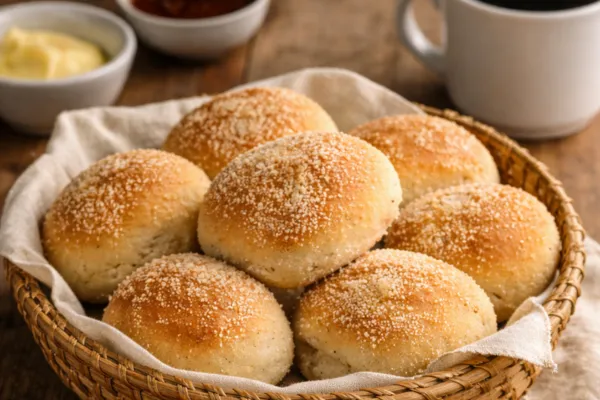
Pandesal is a Filipino yeast-raised bread roll that is usually soft, airy, and lightly sweet, with a fine breadcrumb coating on the outside. It is one of the most recognizable breads in the Philippines and is widely eaten for breakfast, merienda, or as a simple snack throughout the day. Wikipedia describes it as a staple bread roll in the Philippines, while Kawaling Pinoy and Serious Eats both emphasize its soft, fluffy interior and breadcrumb-covered exterior.
Pandesal is the foundational bread of the Philippines — not because anyone declared it so, but because it earned that place one morning at a time, across generations, in every province and every kitchen.
At its core, pandesal is a yeast-raised bread roll. It is small, oval-shaped, lightly golden on the outside, soft and pillowy on the inside, and distinctively coated in fine breadcrumbs that give it a texture unlike any other roll in the world. Wikipedia notes that individual loaves are shaped by rolling the dough into long logs called "bastón" (Spanish for "stick"), which are rolled in fine breadcrumbs, portioned, allowed to rise, and baked.
Despite the name —pan de sal literally translates to "bread of salt" — pandesal is characteristically slightly sweet rather than salty. TasteAtlas confirms this, describing pandesal as a popular bread roll from the Philippines that is "characteristically slightly sweet rather than salty." That gentle sweetness is part of what makes it such a versatile bread: it pairs equally well with savory fillings and sweet spreads.
A classic pandesal often includes:
🌾 Flour — the base of the dough
🧂 Salt — part of the original name and flavor balance
🍬 Sugar — one reason modern pandesal tastes slightly sweet rather than salty
🥛 Milk — often used for softness and tenderness
🧈 Oil or butter — contributing softness and keeping quality
🍞 Breadcrumbs — the signature coating that gives pandesal its sandy exterior
🔥 Yeast — for rise and that airy, fluffy texture
One of the most charming things about pandesal is the contradiction in its name. “Pan de sal” literally means “bread of salt,” yet most modern pandesal is noticeably a little sweet. Wikipedia specifically notes this contrast, saying that despite its name, pandesal tastes slightly sweet rather than salty.
It is also one of those foods that can shape-shift into whatever the meal needs. It can be:
breakfast with coffee
merienda with butter and jam
a sandwich with egg, cheese, sardines, or meat
a quick warm snack eaten plain straight from the bakery bag
That flexibility is part of why pandesal is more than just “a bread roll.” It is a daily companion food. What makes pandesal especially beloved is its accessibility. As Nicole Ponseca, the Filipino American restaurateur behind Maharlika and Jeepney in New York City, told Eater: "It's consumed regularly up and down the country by the rich and by the poor. Even if you're just scraping by, you can still afford a pandesal." That line says everything. It belongs to every Filipino, regardless of status, region, or generation.
📜 The Story Behind It
Pandesal's story is a history lesson baked into bread — literally shaped by colonization, adaptation, and Filipino resilience.
The Philippines did not originally have wheat. The indigenous diet was primarily focused on rice, root crops, and native grains. According to Eater, the majority of Filipino historians agree that wheat-based bread was first introduced to the Philippines by Portuguese explorers in the early 1500s. When Spanish colonizers followed shortly after, they brought with them strong ties to the Catholic church, which needed wheat to produce the hostia—sacramental bread — in their mission to convert indigenous Filipinos.
The earliest precursor to pandesal was pan de suelo ("floor bread"), a harder, crustier bread baked directly on the floor of a wood-fired oven called apugón. Wikipedia describes this as a local Spanish-Filipino version of the French baguette. It was made with whole wheat flour and was harder and crustier than the pandesal we know today.
But the Philippines does not grow wheat — it never has. Bakers eventually had to turn to more affordable, imported flour, which produced a softer, doughier result. Wikipedia explains that since wheat is not natively produced in the Philippines, bakers switched to more affordable yet lighter flour, resulting in the softer texture of modern pandesal.
Pandesal truly flourished during the American colonial era in the early 1900s, when cheaper American wheat became readily available. Eater notes that Americans also introduced commercial yeast, canned dairy, and baking pans — all of which lowered the production cost of pandesal and helped it become the everyday bread it is today. Wikipedia confirms that pandesal has since become a staple breakfast bread in the Philippines.
The word "pandesal" itself is a quiet record of that layered history. The name is Spanish. The technique evolved from European baking. But the bread is entirely Filipino — shaped by local tastes, local economics, local mornings, and the hands of Filipino bakers who made it their own over centuries.
The beloved food historian Doreen Fernandez captured it perfectly in her landmark book Palayok: "Pan de sal is our basic tinapay, our 'bread of salt,' whether puto ko pang-araw-araw. It is the bread of our history, at the core of our culture, at the heart of our tastes. It is brown and plain like the Filipino, good by itself or alone, crisp on the outside and soft on the inside. It is good, basic and strong — just the way we are, and would like the nation to be."
🏠 The Panaderia: Where Pandesal Comes to Life
You cannot fully understand pandesal without understanding the panaderia—the neighborhood Filipino bakery that has been the heartbeat of communities across the Philippines for generations.
In most Filipino neighborhoods, the panaderia is one of the first businesses to wake up. Bakers — led by the maestro panadero, or master baker — begin work well before dawn, mixing dough, shaping bastones, coating them in breadcrumbs, and loading them into the oven so that the first batch is ready before sunrise. GRID Magazine, in its deeply researched feature "The Path of Pan de Sal," documents how traditional bakers at heritage panaderias like Panaderia Dimas-Alang in Pasig (founded in 1919) and Kamuning Bakery in Quezon City (founded in 1939) still use wood-fired pugon ovens—a practice that is increasingly rare but culturally irreplaceable.
The maestro panadero is not a title earned through culinary school. GRID Magazine explains that the title is bestowed at the bakery because of experience and expertise: "An apprentice dives right into the job, learning the ways of the dough by observing, imitating, and making the bread himself. The knowledge is passed down from one baker to the next."
Pandesal is also often sold by vendors who travel by bicycle or tricycle through residential streets early in the morning, carrying baskets or wooden boxes filled with still-warm rolls. That image—the magtitinapayor bread vendor calling out before dawn — is one of the most universally shared childhood memories among Filipinos. It is the sound of the day beginning.
🗺️ Pandesal Variations Across the Philippines
Like so many Filipino foods, pandesal is not one thing. It adapts to every region, every panaderia, and every generation of baker.
This table is a reminder that pandesal, like the Philippines itself, is never just one version. Every bakery, every region, and every generation of baker leaves its mark on the bread.
👅 What Does It Taste Like?
Pandesal tastes like simplicity done right.
The first thing you notice is the crust — thin, barely there, dusted with fine breadcrumbs that give a gentle crunch before giving way to the interior. Inside, the bread is soft, pillowy, and slightly chewy, with a mild sweetness that is present but never dominant. There is a faint warmth from the yeast, a whisper of salt, and if the pandesal was baked in a pugón, the faintest trace of smoke.
TasteAtlas describes pandesal's simple ingredients of flour, yeast, sugar, and salt as having "provided comfort and sustenance to generations of Filipinos." Eater notes that its taste and texture closely resemble those of the Puerto Ricanpan de agua and the Mexican bolillos, though pandesal is generally sweeter and softer than both.
What is remarkable is how much pandesal changes depending on when you eat it. Hot from the oven — which is the only truly correct time, according to virtually every Filipino — pandesal is at its peak: the crust has the lightest crispness, the inside is almost cloud-like, and the sweetness blooms gently on the tongue. As Nicole Ponseca warned in Eater: "Once the bread cools, it changes texture and becomes much more crumbly." That is why the morning rush matters. That is why Filipinos wake up early for it.
If I had to describe it simply: Pandesal tastes like a quiet morning. Warm, soft, uncomplicated, slightly sweet. And when you dip it into a cup of hot black coffee or thick Filipino tsokolate— the bread soaking up just enough liquid to soften without falling apart — it becomes one of the most comforting experiences in all of Filipino food.
🗣️ Learn the Tagalog
One of the nicest ways to understand pandesal is through the language around it.
Because this is an everyday bread, the vocabulary around it often feels domestic and familiar rather than formal. People talk about it in the language of breakfast, bakery visits, coffee, fillings, and whether the bread is still warm. Pandesal is the kind of food that sits comfortably inside ordinary conversation.
Here are some useful Tagalog words and phrases connected to pandesal:
Pandesal / Pan de sal (pahn-deh-sahl) — The bread roll itself
Tinapay (tee-nah-pie) — Bread
Almusal (ahl-moo-sahl) — Breakfast
Merienda (meh-ree-en-dah) — Snack / light meal
Mainit (mah-ee-neet) — Hot / warm
Malambot (mah-lahm-bot) — Soft
Matamis (mah-tah-mis) — Sweet
Keso (keh-soh) — Cheese
Mantikilya (mahn-tee-kee-lyah) — Butter
Kape (kah-peh) — Coffee
Palaman (pah-lah-mahn) — Filling / spread
Masarap (mah-sah-rahp) — Delicious
And here are a few phrases that feel especially at home with this bread:
May pandesal pa ba? (mai pahn-deh-sahl pah bah) — Is there any pandesal left?
Mainit pa ang pandesal. (mah-ee-neet pah ang pahn-deh-sahl) — The pandesal is still warm.
Masarap ang pandesal sa kape. (mah-sah-rahp ang pahn-deh-sahl sah kah-peh) — Pandesal is delicious with coffee.
Lagyan mo ng keso. (lahg-yan moh nang keh-soh) — Put some cheese in it.
What I love about these words is how naturally they belong to daily life. Almusal matters because pandesal is so strongly tied to morning. Palaman matters because people rarely stop at plain bread for long. Mainit matters because fresh warm pandesal is a very specific kind of comfort.
🤩 Fun Facts About Pandesal
1. Pandesal is called "bread of salt" — but it tastes sweet. The name pan de sal is Spanish for "bread of salt," but the modern version is characteristically slightly sweet. Wikipedia and TasteAtlas both note this irony. The original recipe had only 1.75% sugar, but contemporary versions can contain up to 18% — a massive shift that reflects changing Filipino tastes over generations.
2. Pandesal is ranked the number one bread roll in all of Asia. TasteAtlas ranks pandesal first among Asian bread rolls, ahead of Kazakhstan's baursak, India's pav, and Hong Kong's piggy bun. In its October 2025 edition, TasteAtlas also included pandesal among the 50 Best Breads in the World with a rating of 4.3.
3. The Oxford English Dictionary includes "pan de sal." The OED defines it as "a yeast-raised bread roll made of flour, eggs, sugar and salt, widely consumed in the Philippines, especially for breakfast." That means pandesal has been formally recognized in one of the English language's most authoritative references.
4. Pandesal's ancestor was baked directly on the oven floor.The pan de suelo ("floor bread") was crustier, denser, and baked on the floor of a wood-fired pugón. Modern pandesal evolved from this bread when bakers switched to lighter, cheaper imported flour during the American colonial era.
5. The distinctive mark on top of pandesal has a name: singkit. GRID Magazine documents that older panaderos call the leaf-shaped ridge on top of traditional pandesal singkit, Tagalog for "small eyes." In some Cavite City bakeries, it is called gatlâ. This mark is created by pressing a wooden dough cutter into the bastón— a technique known only within the traditional baking trade.
6. Filipinos use pandesal as an ice cream cone.Street vendors selling sorbetes— Filipino coconut milk ice cream — will stuff scoops directly into a split pandesal roll instead of a wafer cone. It costs less and, according to many Filipinos, tastes better.
7. One of the Philippines' oldest surviving bakeries has been making pandesal since 1939. Kamuning Bakery in Quezon City still bakes pandesal in a traditional wood-fired pugón. It is one of the last heritage bakeries in Metro Manila to do so, and its pandesal has been hailed as one of the best in the city.
8. Pandesal kept its price when almost nothing else did. Throughout the Philippines' modern history, pandesal has remained one of the most affordable foods in the country. As flour prices rose, bakers adjusted by reducing the size of each roll rather than raising the price — which is why pandesal has gotten smaller over the decades. In 1908, a single pandesal weighed 80 grams. Today, most weigh between 25 and 30 grams.
9. Ube cheese pandesal became a nationwide sensation. The purple yam and cheese variant went viral across Filipino bakeries and social media, becoming one of the most popular modern riffs on the classic. Wikipedia notes it is "characteristically purple like all ube-based dishes."
10. Pandesal is the bread Doreen Fernandez chose to represent the Filipino spirit. The legendary food historian wrote in Palayok: "It is brown and plain like the Filipino, good by itself or alone, crisp on the outside and soft on the inside. It is good, basic and strong — just the way we are, and would like the nation to be."
🍳 What Do You Eat with Pandesal?
Pandesal is one of the most versatile breads in the world — not because it is complex, but because its simplicity makes it a canvas for everything.
The traditional pairings are timeless: hot coffee (often barako, a strong Filipino brew), tsokolate (Filipino hot chocolate made from tablea cacao), or warm milk. Pandesal is dipped, torn apart, and eaten piece by piece — never rushed. For many Filipino families, this is the first meal of the day, quiet and unhurried.
Beyond dipping, pandesal is filled, spread, and stuffed with almost anything. The most beloved fillings include kesong puti (fresh Filipino white cheese), peanut butter, butter with a sprinkle of sugar, palaman (jam or spread), sardines, corned beef, Spam, scrambled eggs, and coco jam (coconut jam). For merienda — the Filipino mid-afternoon snack—pandesal is often eaten again with a different filling or simply reheated and served alongside whatever is on the table.
One of the most charming traditions is the sorbetes pairing. In the Philippines, street vendors selling sorbetes—traditional Filipino ice cream made with coconut milk, also fondly called "dirty ice cream" — will stuff scoops of it directly into a split pandesal instead of a cone. As Ponseca shared in Eater: "You could save a couple of pesos by going to an ice cream man and giving him pandesal instead of a cone." That image — pandesal as an ice cream vessel — captures everything about how Filipinos treat this bread: it adapts. It always works.
☕ Why It Belongs at Breakfast
Some foods are strongly tied to one moment of the day, and pandesal is one of them.
Wikipedia notes that it is commonly eaten for breakfast, often hot and paired with coffee, milk, or hot chocolate. That pairing makes immediate sense. Pandesal is soft but not heavy, mildly sweet but not dessert-like, and easy to fill, spread, dip, or eat plain. It has exactly the kind of flavor and texture that belongs beside a morning drink.
And because it is often sold fresh from neighborhood bakeries, it also carries the feeling of a start — of the day beginning with something warm in your hands.
That may be why it feels so deeply anchored in Filipino mornings. It is not only breakfast. It is breakfast atmosphere.
❓ FAQ — Everything You Need to Know About Filipino Pandesal
What is pandesal? Pandesal is a soft, slightly sweet Filipino bread roll made from flour, yeast, sugar, salt, and oil or butter, coated in fine breadcrumbs and baked until golden. Wikipedia describes it as a staple bread roll in the Philippines commonly eaten for breakfast. Its name comes from the Spanish pan de sal, meaning "bread of salt."
What does pandesal taste like? Pandesal tastes mildly sweet, soft, and slightly yeasty, with a thin, breadcrumb-coated crust. Despite its name meaning "bread of salt," it is more sweet than salty. TasteAtlas describes it as "characteristically slightly sweet rather than salty."
Is pandesal the national bread of the Philippines? There is no official national bread, but pandesal is universally considered the Philippines' most iconic and beloved bread. Eater states that "if the Philippines had a national bread, it would be pandesal."
Why is pandesal coated in breadcrumbs? The breadcrumb coating is a defining characteristic. The dough log (bastón) is rolled in fine breadcrumbs before being cut and baked. This creates the distinctive outer texture and prevents the cut pieces from sticking together.
What do you eat with pandesal? Pandesal is traditionally dipped in hot coffee, tsokolate (Filipino hot chocolate), or warm milk. It is also eaten with kesong puti (white cheese), peanut butter, butter with sugar, jam, sardines, corned beef, Spam, scrambled eggs, andcoco jam. Some Filipinos use pandesal as a vessel forsorbetes (coconut milk ice cream).
What is the difference between traditional and modern pandesal? Traditional pandesal is oval-shaped, crustier, less sweet (only 1.75% sugar), and often baked in a pugón (wood-fired oven). Modern pandesal is rounder, softer, lighter in color, and significantly sweeter (up to 18% sugar), typically baked in gas ovens.
What is pan de suelo? Pan de suelo ("floor bread") is the ancestor of pandesal — a harder, crustier bread baked directly on the floor of a wood-fired pugón. It is the original Spanish-Filipino bread from which modern pandesal evolved.
Can you make pandesal at home? Yes. Pandesal requires only basic baking ingredients: flour, yeast, sugar, salt, oil or butter, and breadcrumbs for coating. Many recipes are available for home bakers, though Filipinos widely agree that pandesal from a neighborhood panaderia — eaten hot — is the gold standard.
How long does pandesal stay fresh? Pandesal is best eaten immediately while still warm. It becomes drier and more crumbly as it cools. Leftover pandesal can be toasted, turned into bread pudding, or used as a base for sandwiches the next day.
Where can I find pandesal outside the Philippines? Filipino bakeries in cities with large Filipino communities — including Los Angeles, New York, Jersey City, Toronto, Dubai, London, and Sydney — bake pandesal daily. Valerio's City Bakery in California, founded in 1979, is one of the most famous Filipino bakeries in the United States and is legendary for its pandesal.
💛 Closing CTA
Pandesal is more than a bread roll. It is one of those foods that carries the rhythm of daily life inside it — the quiet warmth of a bakery open before dawn, the sound of a paper bag set on the table, the steam rising from a roll torn open, and the comfort of knowing that something this simple can hold an entire morning together.
It survived centuries of colonial history, adapted through every era of Filipino life, traveled with millions of Filipinos to every corner of the world, and somehow stayed exactly what it always was: the bread of every day, the bread of every Filipino, the bread that means home.
At Studio Tributes, we celebrate Filipino culture through food, art, and the stories that travel with both. Whether you are discovering pandesal for the first time or remembering it from your own family mornings, we hope this gave you a warmer, deeper way to connect with one of the Philippines' most beloved and quietly powerful traditions.
If you’d like to explore Filipino food through art, memory, and family connection, download our FREE Filipino Food Coloring pages—they are waiting for you.
👉 What Filipino Food Are You? Take the quiz →
👉 Get your FREE Filipino coloring pages here.
Keep exploring Filipino food and culture with us:
🎨 Get our Filipino Food Activity Book on Amazon
📚 Read more Filipino food stories on our blog
💭 A Memory to Hold Onto
Did pandesal bring back a morning for you?
Maybe a bakery bag still warm in your hands.
Maybe coffee on the table and somebody splitting bread open beside you.
Maybe a favorite filling you always hoped was in the kitchen.
Did your family buy pandesal fresh in the morning?
What did you love inside it most?
What memory comes back when you picture those soft golden rolls?
If a memory came to mind, share your pandesal story on Facebook or Instagram and tag @StudioTributes so we can celebrate it with you. And if you’d like more warm Filipino food stories, cultural memories, and creative inspiration, come spend time with us on social media.
Sometimes, the simplest foods carry the strongest memories. Related Filipino Dishes You Might Recognize
If you’re exploring Filipino breakfast and comfort foods, you may also enjoy learning about:
Together, these dishes tell the story of Filipino life — from everyday mornings to large celebrations.
📚 References & Further Reading
📖 Wikipedia — Pandesal — Comprehensive entry on pandesal's history, ingredients, variants, and the evolution from pan de suelo to modern bread rolls. Cited throughout this article.
📖 TasteAtlas — Pandesal — Traditional Bread Roll from the Philippines — Global culinary database entry for pandesal, which ranks it among the best bread rolls in Asia and included it in the 56 Best Bread Rolls in the World (rating 4.3).
📖 Eater — "How Pandesal Became a Filipino Breakfast Staple" (2016) — In-depth feature by Khushbu Shah on pandesal's colonial origins, the panaderia tradition, and modern iterations, with insights from Nicole Ponseca and chef Ariel Layug.
📖 GRID Magazine — "The Path of Pan de Sal" — Deeply reported feature on traditional pandesal-making at heritage panaderias including Panaderia Dimas-Alang (1919) and Kamuning Bakery (1939), documenting the maestro panadero tradition and pugón baking.
📖 Oxford English Dictionary — "pan de sal, n." — Formal English-language dictionary entry defining pandesal as "a yeast-raised bread roll made of flour, eggs, sugar and salt, widely consumed in the Philippines." (The OED is subscription-only; no direct public URL available. Access via your library at oed.com.)
📖 Doreen Fernandez — Palayok — Landmark book on Filipino food culture, containing Fernandez's celebrated passage on pandesal as a symbol of Filipino identity. (A physical book; no online URL. Available via Philippine libraries and select online booksellers.)
📖 Tasting Table — "Pandesal: The Filipino Bread Rolls You Should Know" — Accessible overview of pandesal's history, ingredients, and eating traditions.
📖 Serious Eats — "Pandesal (Filipino Rolls) Recipe" — Detailed recipe and ingredient analysis for home bakers.
This article blends Studio Tributes storytelling with cultural and culinary research to create a warm, family-friendly learning experience.