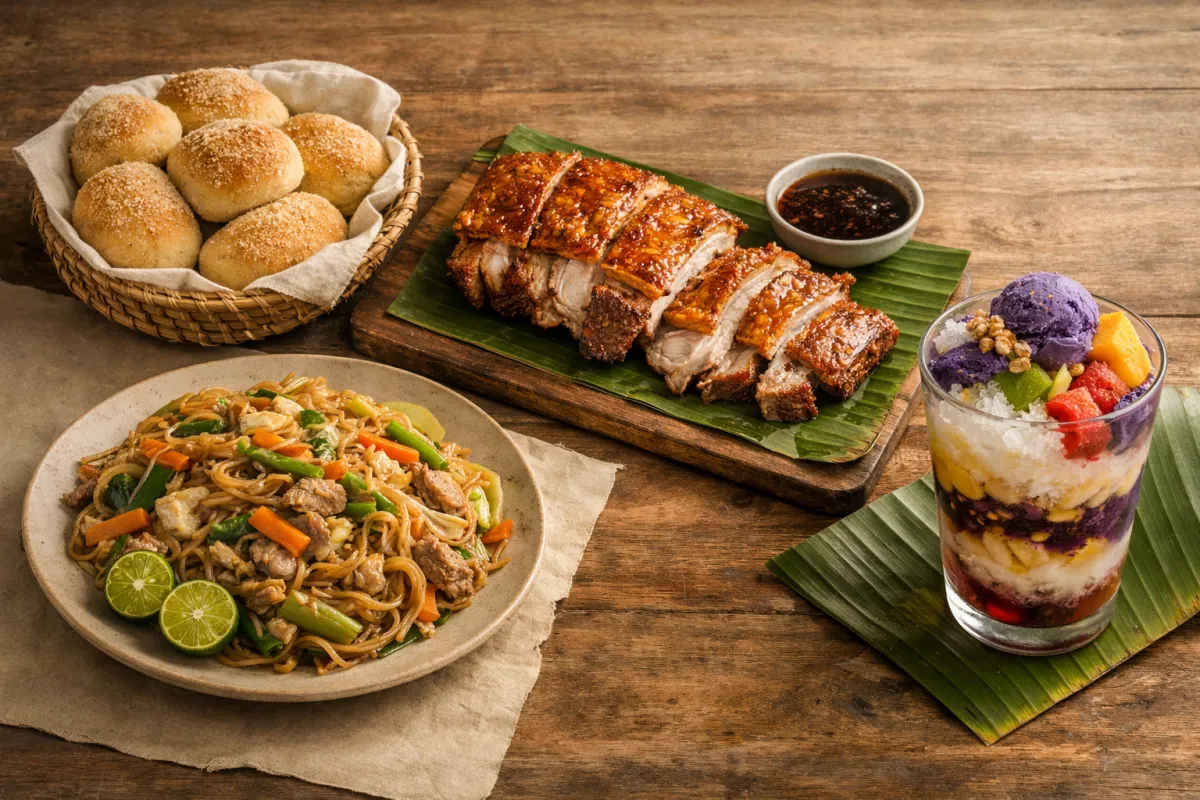
Filipino Food: A Living Story of Flavor, Memory, and Heritage
Studio Tributes / Filipino Food
Filipino Food: A Living Story of Flavor, Memory, and Heritage
Introduction
Filipino food is more than cuisine — it is memory, migration, celebration, and survival served at the table.
From warm pandesal at sunrise to lechon carved at fiestas, Filipino dishes carry centuries of influence shaped by indigenous traditions, Spanish colonization, Chinese trade, American history, and regional diversity across more than 7,000 islands.
If you’ve ever asked:
What is pandesal?
What is halo-halo?
What is lechon?
What is pansit?
This guide will introduce you to the foundations of Filipino cuisine — its flavors, rhythms, and cultural meaning — while linking to deeper explorations of each iconic dish.
Welcome to Filipino food.
What Makes Filipino Food Unique?
Filipino cuisine is defined by balance.
It blends sweet and savory, sour and rich, comforting and celebratory.
Core flavor foundations include:
• Vinegar
• Soy sauce
• Garlic
• Calamansi
• Coconut milk
• Fish sauce (patis)
• Sugar for balance
Filipino food is also shaped by history. Indigenous Austronesian cooking techniques meet Spanish stews, Chinese noodles, and American influences — creating dishes that feel both familiar and distinctly Filipino.
The Five Rhythms of Filipino Food
Food in Filipino culture follows the rhythm of daily life and celebration. These categories reflect how dishes are experienced — not just eaten.
1. The Breakfast Table (Almusal)
Morning meals are comforting and simple — often shared before school or work.
Learn more:
Pandesal — soft bread rolls — are one of the most recognizable Filipino breakfast staples.
2. Fiesta Feasts (Handaan)
Celebrations call for dishes that are abundant and symbolic.
Explore:
• 👉 What Is Lechon?
• 👉 What Is Pansit?
Lechon represents festivity and generosity.
Pansit symbolizes long life and shared fortune.
3. Street Food & Everyday Snacks (Meryenda)
Between meals, Filipinos enjoy playful and nostalgic street snacks.
Discover:
• 👉 What Is Kwek-Kwek?
• 👉 What Is Turon?
These dishes reflect accessibility, community, and daily life.
4. Sweet Endings (Panghimagas)
Desserts in the Philippines celebrate tropical abundance and layered textures.
Read more:
• 👉 What Is Halo-Halo?
• 👉 What Is Leche Flan?
• 👉 What Is Kakanin?
Sweet dishes are often tied to holidays, gatherings, and childhood memories.
5. Noodles & Global Threads
Noodle dishes trace Chinese influence and have become deeply Filipino in meaning.
Learn about:
• 👉 What Is Pansit Canton?
• 👉 What Is Palabok?
Pansit dishes are staples at birthdays and milestones.
Why Filipino Food Matters
Filipino meals are communal.
They are rarely eaten alone.
Food becomes:
• A bridge between generations
• A keeper of language
• A symbol of hospitality
• A memory anchor for diaspora families
When language fades, food often remains.
A dish served at the table carries stories — of grandparents, migration, childhood, and home.
Filipino Food in the Diaspora
Across the United States, Canada, Australia, and Europe, Filipino cuisine continues evolving.
New generations are:
• Rediscovering heritage
• Teaching Tagalog words through dishes
• Reclaiming traditional flavors
• Sharing Filipino culture beyond the community
Filipino food is not static — it adapts while holding memory.
A Living Archive
At Studio Tributes, we believe that:
Coloring a dish.
Naming it in two languages.
Asking, “What does this remind you of?”
— are powerful acts of preservation.
Explore our heritage-inspired collection:
👉 Visit the Studio Tributes Collection
👉 Get My Free Pages
Frequently Asked Questions About Filipino Food
What is the most famous Filipino dish?
Adobo is often considered the national dish of the Philippines.
Why is Filipino food sweet?
Many Filipino dishes include subtle sweetness to balance sour and savory flavors.
Is Filipino food spicy?
Traditional Filipino cuisine is generally mild, though regional variations can include heat.
What is a typical Filipino breakfast?
A common breakfast includes pandesal, rice, eggs, and coffee.
What is pansit?
Pansit refers to Filipino noodle dishes influenced by Chinese cuisine, often served at celebrations.