
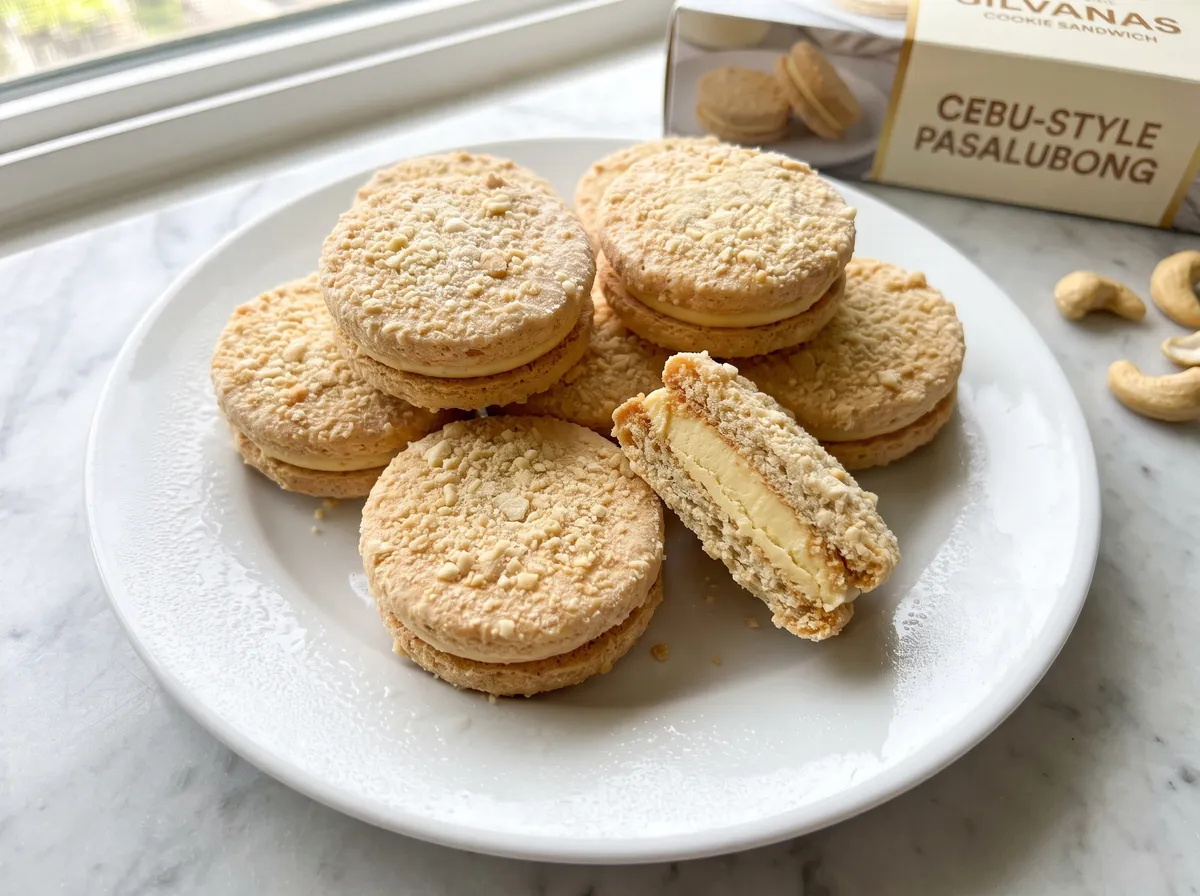
What Is Silvanas? The Cebu Frozen Cookie Sandwich You Need to Try
What Is Silvanas? The Cebu Frozen Cookie Sandwich You Need to Try
Open a pasalubong box fresh from Cebu, and chances are you'll find a neat row of pale, crumb-coated discs sitting in a plastic tray, suspiciously cold to the touch even if the box has been sitting out for a while. Bite into one and you'll discover a textural experience that's hard to categorize: a thin, delicate crunch gives way almost immediately to something closer to ice cream cake—cool, creamy, buttery, slightly chewy at the edges.
This is Silvanas, and if you've never had one, you're in for a genuinely unique dessert experience. If you have had one, you already understand why Cebuanos get fiercely particular about where they buy them, how frozen they should be when served, and why—despite what half the internet will tell you—calling this thing "the Filipino macaron" might be doing it a disservice.
Let's dig into what Silvanas actually is, where it (probably, maybe, depending on who you ask) came from, and why this small, frozen treat deserves to be understood on its own terms.
The Basics: What Exactly Is Silvanas?
Silvanas is a Filipino dessert, specifically associated with Cebu, made of two thin meringue wafers (often incorporating ground cashews) sandwiched together with buttercream filling, then coated on the outside with fine crushed cookie or wafer crumbs, and traditionally served frozen.
The experience is built on contrast:
Thin, crisp-to-slightly-chewy meringue layers
Rich, smooth buttercream filling
A fine, sandy coating of crushed cookie crumbs on the exterior
Served cold—often straight from the freezer
That last point matters enormously, and we'll come back to it, because the frozen serving temperature isn't incidental. It fundamentally changes the eating experience, transforming what would otherwise be a fairly standard meringue-buttercream sandwich into something closer to a frozen confection.
The Essential Components
The Meringue Wafers:
Egg whites, whipped with sugar into a stable meringue
Often incorporating finely ground cashews (though some versions skip the nuts entirely or use other nuts)
Baked low and slow until crisp and lightly golden
Thin enough to create a delicate, almost wafer-like structure
The Filling:
A rich buttercream, typically made with butter, sugar, and sometimes egg yolks (closer to a French or Italian buttercream than the simpler American confectioner's-sugar-and-butter style)
Smooth, creamy, and substantial enough to hold the two meringue layers together
The Coating:
Finely crushed cookies or wafers, pressed onto the exterior of the assembled sandwich
This coating adds textural contrast and visually distinguishes Silvanas from other meringue-based desserts
The Serving Temperature:
Frozen or heavily chilled, which firms up the buttercream and creates that distinctive cool, almost ice-cream-like mouthfeel
Where Did Silvanas Actually Come From? The Honest Answer
Here's where we need to be careful and honest rather than inventing a tidy origin story, because the real answer is genuinely murkier than most casual food articles suggest.
The Cebu Connection Is Clear
What's not in dispute: Silvanas is strongly identified with Cebu, specifically with the city's thriving pasalubong (travel gift) industry. Several well-established Cebuano bakeries and pasalubong shops are known for producing Silvanas, and it has become one of the signature items visitors are expected to bring home when leaving Cebu—alongside items like dried mangoes, otap, and chicharon.
Among the bakeries commonly associated with popularizing Silvanas in Cebu, Done's Bakeshop is frequently cited by Cebuanos and food writers as one of the most prominent names connected to the dessert's rise in popularity, though it exists alongside numerous other bakeries and home-based producers who also make and sell their own versions.
Who Actually Invented It? That's Genuinely Unclear
This is where honesty matters more than a satisfying narrative: there isn't a single, well-documented, universally agreed-upon inventor of Silvanas. Unlike some Filipino dishes where food historians can point to a specific person, restaurant, or decade with reasonable confidence, Silvanas' exact origin story is fuzzy, and multiple Cebuano bakeries and bakers have, at various points, been credited by different sources as the originators or key popularizers.
This pattern—multiple plausible claimants, no definitive documentation, competing local narratives—is actually common in food history, not just in the Philippines but globally. Dishes that emerge from a specific regional food culture, developed by home bakers and small commercial kitchens rather than a single celebrated chef, often resist tidy origin stories. The cronut has a clear inventor because it was a modern, trademarked, media-covered event. Silvanas, emerging from mid-20th-century Cebuano home and commercial baking, doesn't have that same documentation trail.
The Honest Editorial Position
The responsible approach is to resist the temptation to manufacture a clean origin story where one doesn't clearly exist. Food blogs and even some tourism materials sometimes present confident, specific origin claims about Silvanas that aren't actually well-substantiated by verifiable historical records. Repeating these claims as settled fact does a disservice to accurate food history, even if it makes for a tidier article.
What can be said with confidence: Silvanas is a Cebuano dessert, deeply embedded in the city's bakery and pasalubong culture, likely developed and refined by multiple bakers over time rather than invented wholesale by a single identifiable individual. That's a less satisfying story than "Baker X invented this in Year Y," but it's the more honest one—and frankly, it's also a more interesting reflection of how regional specialties actually develop: through iteration, competition, and shared culinary culture among multiple cooks rather than singular genius.
The "Filipino Macaron" Debate: Helpful Shorthand or Reductive Comparison?
Here's where we land on a genuine, worth-having editorial debate: should Silvanas be described as "the Filipino macaron"?
The Case for the Comparison
This framing shows up constantly in food writing, travel blogs, and even some bakery marketing materials, and there are reasonable arguments for it:
It provides instant context for unfamiliar audiences: For someone who has never heard of Silvanas, saying "it's kind of like a Filipino macaron" immediately conjures a mental image—a small, sandwich-style confection with a filling between two shell-like components. This shorthand helps newcomers understand the basic concept quickly.
Both involve meringue-based shells: French macarons are built on meringue (specifically, meringue mixed with almond flour), and Silvanas also uses a meringue base. There's a legitimate technical connection in the use of whipped egg whites as a structural foundation.
Marketing benefits are real: For bakeries trying to introduce Silvanas to international or non-Filipino audiences, referencing a globally recognized dessert can lower the barrier to trying something new.
The Case Against the Comparison
However, there are substantive reasons to push back on this framing, and the argument against it deserves real weight:
It's not actually technically accurate: French macarons use almond flour incorporated into the meringue, creating a shell with a crisp exterior and a distinctly chewy, slightly dense interior, sandwiched with ganache, buttercream, or jam—served at room temperature or lightly chilled. Silvanas uses a thinner, often cashew-incorporated meringue wafer (sometimes with no nut flour structure at all), filled with a different style of buttercream, coated in crushed cookie crumbs (something macarons never have), and critically, served frozen. The frozen serving temperature alone creates a completely different eating experience—more akin to a frozen icebox dessert than anything resembling a macaron's room-temperature texture.
It subordinates a distinct culinary tradition to a more globally prestigious one: There's a recurring pattern in food media where non-Western desserts and dishes get defined primarily through comparison to more internationally recognized European counterparts—"the Filipino X" or "Asian Y, basically a Z." This framing, even when well-intentioned, implicitly positions the French pastry as the reference point of legitimacy that the "lesser-known" dish needs to borrow credibility from. Silvanas doesn't need to be legitimized by comparison to macarons; it has its own clear identity, context, and reason for existing.
It obscures what's actually distinctive about Silvanas: The crushed cookie coating, the frozen serving tradition, the specific pasalubong culture it's embedded in, the cashew-forward flavor profile common in many versions—these are the actually interesting, specific details about Silvanas. Leading with "it's basically a Filipino macaron" skips past all of this in favor of a comparison that, on closer inspection, doesn't even hold up particularly well on technical grounds.
The Stance Worth Taking
The "Filipino macaron" label should be retired, or at minimum heavily qualified, in favor of describing Silvanas accurately on its own terms.
This doesn't mean the comparison is malicious or that people using it have bad intentions—it's genuinely a useful shorthand for quick, casual explanation, and plenty of Filipino food writers and bakeries use it themselves, including for practical marketing reasons. But "useful shorthand" and "accurate description" aren't the same thing, and food writing that aims for genuine understanding rather than quick marketing hooks should prioritize describing Silvanas for what it actually is: a frozen, cashew-meringue buttercream sandwich coated in crushed cookie crumbs, rooted specifically in Cebuano pasalubong culture.
If a comparison point is needed for unfamiliar readers, a more technically honest one might reference frozen icebox cakes or vacherin-style frozen meringue desserts—though even these comparisons are imperfect, which is really the point. Silvanas is its own thing. It doesn't need a French stand-in to be understood or valued.
Why Frozen? Understanding the Serving Temperature Tradition
One of the most distinctive and sometimes confusing aspects of Silvanas for first-time eaters is the frozen serving tradition. Why would a meringue-and-buttercream dessert be served cold enough to have ice crystals?
The Practical Origins
Several practical factors likely contributed to this tradition becoming standard:
Buttercream stability in tropical climate: The Philippines' consistently warm, humid climate makes butter-based fillings notoriously difficult to keep stable at room temperature. A rich buttercream filling left out in Cebu's heat would quickly soften, become greasy, and lose structural integrity. Freezing or heavily chilling the finished product solves this problem directly, keeping the filling firm and the overall dessert intact during transport and storage—particularly important for a product explicitly designed to be packed into pasalubong boxes and carried on trips, sometimes for hours, before reaching their final destination.
Shelf life and food safety: A dairy-and-egg-based filling benefits significantly from cold storage in terms of both safety and quality preservation, making frozen storage a sensible choice for a commercially produced, widely shipped treat.
The resulting texture became the point: What likely began as a practical storage and transport solution evolved into a defining characteristic of the dessert itself. The cold, slightly firm, almost ice-cream-cake texture of a properly frozen Silvanas isn't a workaround—it's now understood as the authentic, correct way to experience the dessert. Serving Silvanas at room temperature, where the buttercream would be notably softer and the meringue potentially softened by surrounding moisture, is generally considered a lesser, if not improper, way to enjoy it.
The Frozen vs. Slightly Thawed Debate
Within Cebuano and broader Filipino dessert culture, there's a smaller, more lighthearted debate about exactly how frozen Silvanas should be when eaten:
The straight-from-the-freezer camp argues that maximum coldness delivers the best textural experience—a firm, almost ice-cream-like bite that showcases the dessert at its most distinctive.
The slightly-thawed camp argues that a few minutes resting at room temperature before eating allows the buttercream to soften just enough to taste its full flavor and creaminess, arguing that rock-hard frozen buttercream can mute flavor perception and make the texture more icy than creamy.
This remains genuinely a matter of personal preference, though most guidance suggests a brief thaw—perhaps five to ten minutes out of the freezer—strikes a reasonable balance, allowing some flavor development without losing the distinctive cool, firm character that defines the dessert.
The Cashew Question: Does Silvanas Need Nuts?
A smaller but real point of variation among different Silvanas producers concerns the use of cashews in the meringue layers.
The Traditional Cashew-Forward Version
Many classic and well-regarded Silvanas recipes incorporate finely ground cashews into the meringue mixture, which:
Adds a subtle nutty flavor and aroma
Contributes to a slightly different texture than plain meringue (a bit more substance and chew)
Reflects a broader Filipino affinity for using ground nuts in baked goods and confections
The Plain Meringue Version
Other producers and home bakers make a simpler version using plain meringue without any nut incorporation, which:
Allows the buttercream flavor to be more prominent
Simplifies the recipe and reduces ingredient costs
Produces a slightly different, sometimes crisper, texture in the wafer layers
Neither version is more "correct" than the other—both exist across different Cebuano bakeries and home kitchens, and preference largely comes down to individual taste and which version a person grew up eating. This variation is worth knowing about primarily so that first-time Silvanas eaters understand that some textural and flavor differences between brands aren't inconsistency or poor quality—they reflect genuine recipe variation within the broader Silvanas category.
Silvanas and Pasalubong Culture
To understand Silvanas fully, you need to understand the broader Filipino tradition it's embedded in.
What Is Pasalubong?
Pasalubong refers to the Filipino tradition of bringing gifts—almost always food—back from a trip for family, friends, and coworkers who didn't get to travel along. It's a deeply embedded social expectation rather than an optional nicety; returning from a trip without pasalubong can genuinely disappoint people who were anticipating a taste of wherever you visited.
Cebu's Specific Pasalubong Identity
Cebu has developed a particularly strong pasalubong food identity, with several items considered essential purchases for anyone visiting the city:
Dried mangoes
Otap (a flaky, sugar-dusted pastry)
Chicharon (pork cracklings)
Rosquillos (ring-shaped cookies)
Silvanas
Silvanas occupies a particular niche within this lineup: it's one of the few pasalubong items that requires cold storage, which actually works in its favor in a specific way—because it must be kept frozen or refrigerated, receiving Silvanas as pasalubong carries an implicit message that the giver made a specific, somewhat inconvenient effort to keep it properly stored throughout the journey. This adds a certain value and thoughtfulness to the gift that shelf-stable items like dried mangoes don't quite carry in the same way.
The Christmas and Gift-Giving Season Spike
Like many pasalubong items, Silvanas sees significant demand spikes during the Christmas season, when:
Overseas and domestic travel to see family increases dramatically
Gift-giving culture intensifies around the holidays
Bakeries often ramp up production and sometimes introduce seasonal packaging or variations
This seasonal pattern mirrors broader Filipino food culture dynamics, where certain treats become almost obligatory purchases during specific calendar windows, driven by travel patterns and gift-giving expectations rather than the food itself having any inherent seasonal ingredient requirement.
How to Eat Silvanas Properly
There's a reasonably established etiquette and approach to enjoying this dessert at its best.
The Recommended Approach
Step 1: Retrieve from freezer
Take your Silvanas out of freezer storage, ideally a few minutes before you intend to eat it.
Step 2: Brief rest (optional but recommended)
Allow approximately 5-10 minutes at room temperature, letting the buttercream soften slightly from rock-hard to a firm-but-yielding texture.
Step 3: Single bite or small portions
Given its rich, dense composition, Silvanas is typically eaten in a few bites rather than large mouthfuls—it's quite filling and rich despite its small size.
Step 4: Pair thoughtfully
Many people enjoy Silvanas alongside coffee or tea, where the hot beverage provides pleasant contrast to the cold, rich dessert.
Storage After Opening
Once a box of Silvanas has been opened, proper storage matters:
Keep refrigerated or frozen at all times when not immediately eating
Consume relatively promptly once thawed repeatedly, as the buttercream filling doesn't hold up well to repeated freeze-thaw cycles
Avoid leaving at room temperature for extended periods, both for food safety and texture preservation
Making Silvanas at Home: What You're Actually Getting Into
For ambitious home bakers wanting to attempt Silvanas, here's a realistic picture of the process and its challenges.
The Technical Challenges
Meringue consistency: Achieving properly stiff, stable meringue that bakes into thin, even wafers requires attention to detail—clean, grease-free equipment, properly whipped egg whites, and careful baking at low temperatures to dry out the meringue without browning it excessively.
Humidity sensitivity: Meringue is notoriously sensitive to humidity, which can prevent proper crisping and drying. This is particularly relevant for anyone attempting Silvanas in humid climates (ironically including much of the Philippines itself), often requiring well-controlled baking environments or longer, lower-temperature baking times.
Buttercream technique: A proper French or Italian-style buttercream (common in quality Silvanas) requires more technical skill than simple American buttercream, involving cooked sugar syrup or cooked egg components incorporated into whipped butter.
Uniform assembly: Creating evenly sized, matched meringue wafer pairs, spreading consistent buttercream layers, and achieving an even crushed cookie coating all require practice and patience.
Realistic Expectations
Home bakers should expect:
Multiple attempts before achieving consistent results
The need for an oven capable of maintaining low, stable temperatures for extended periods
A genuine appreciation afterward for why commercial Silvanas producers have refined their processes over years of practice
Sourcing Ingredients
Most ingredients (eggs, sugar, butter, cashews, cookies for crushing) are generally accessible in most grocery stores, making this one of the more approachable Filipino specialty desserts to attempt at home, even outside the Philippines—the primary challenge is technique rather than ingredient sourcing.
The Health Question: What's Actually in Silvanas?
Let's be straightforward about the nutritional reality of this rich treat.
Nutritional Profile
From the meringue layers:
Primarily egg whites and sugar
Some fat and protein if cashews are incorporated
Relatively light on its own, before considering the filling
From the buttercream filling:
Significant butter content (substantial fat and calories)
Sugar
Sometimes egg yolks, adding richness and some protein
From the cookie crumb coating:
Additional sugar and refined carbohydrates
Some additional fat depending on the cookies used
Overall:
Silvanas is, unsurprisingly, a calorie-dense, sugar-and-fat-rich treat. It was never intended as health food, and like most beloved desserts worldwide, it's meant for occasional indulgence rather than regular consumption.
Reasonable Context
Given its:
Small individual serving size (typically eaten one or two at a time)
Association with special occasions, gift-giving, and travel treats rather than daily eating
Rich, filling nature that naturally limits overconsumption
Silvanas fits reasonably into an occasional indulgence framework, similar to how one might think about any rich dessert enjoyed in moderation as part of celebration or gift-sharing rather than everyday eating.
Silvanas Compared to Other Filipino and Global Frozen Desserts
Understanding Silvanas benefits from placing it alongside both Filipino and international dessert comparisons—done honestly rather than reductively.
Within Filipino Dessert Culture
Sans Rival: Another Filipino dessert built on similar DNA—meringue layers (often with cashews) and French buttercream—but typically assembled as a larger cake rather than individual sandwich cookies, and generally not served frozen in the same deliberate way. Sans Rival and Silvanas likely share conceptual and technical ancestry, making this a more legitimate and interesting internal comparison than reaching for macarons.
Polvoron: A crumbly, shortbread-like Filipino treat, different in technique and texture but similarly beloved as a pasalubong item, showing the broader Filipino affection for rich, buttery treats.
International Comparisons Worth Considering
Vacherin: A French dessert involving meringue layers, often with cream or ice cream, that's actually served cold or frozen—arguably a more technically apt comparison point than macarons, given the frozen serving tradition, though still an imperfect match.
Icebox cakes: The broader category of desserts assembled and then frozen or heavily chilled to achieve their final texture, a category Silvanas arguably fits more naturally than the macaron category.
The point of these comparisons isn't to find Silvanas' "equivalent"—it's to illustrate that more technically apt comparisons exist than the macaron framing, even if none of them are perfect, because Silvanas genuinely occupies its own specific niche.
Why Silvanas Matters Beyond Being Delicious
This small, frozen treat carries significance extending past its flavor and texture.
A Case Study in Food Media Shorthand
The "Filipino macaron" debate surrounding Silvanas offers a useful, concrete example of a broader pattern in how global food media describes non-Western dishes—frequently anchoring unfamiliar foods to more internationally prestigious reference points rather than describing them confidently on their own terms. Paying attention to this pattern, and pushing back on it where appropriate, contributes to a more respectful and accurate approach to food writing generally.
Honest Food History Over Tidy Narratives
Silvanas' murky, multiply-claimed origin story serves as a reminder that not every beloved regional dish has (or needs) a clean, documented invention story. Resisting the urge to manufacture false certainty—even when a tidier narrative would make for a more satisfying article—matters for maintaining genuine food history integrity.
Economic Significance for Cebu
The pasalubong industry, including Silvanas production, represents meaningful economic activity for Cebu, supporting bakeries, their employees, ingredient suppliers, and the broader tourism-adjacent economy that depends on visitors purchasing food gifts before departing the city.
A Practical Solution Turned Cultural Signature
The frozen serving tradition, likely born from practical necessity (keeping buttercream stable in tropical heat during transport), demonstrates how practical constraints can evolve into defining cultural and culinary characteristics—a pattern worth appreciating rather than viewing frozen serving as merely a workaround to something "better" served otherwise.
Ready to Try Silvanas? Here's Your Action Plan
If you're ready to experience this distinctive Cebuano treat, here's how to approach it thoughtfully.
For Those in the Philippines
Visit Cebu specifically: While Silvanas has spread to other parts of the Philippines through pasalubong sharing and some bakery expansion, Cebu remains the most reliable source for a wide range of quality options.
Try multiple producers: Sample Silvanas from a few different bakeries to understand the range of variation in meringue style (cashew vs. plain), buttercream richness, and coating texture.
Buy it properly packed: If purchasing to bring elsewhere, ensure it's packed with appropriate cold retention (ice packs, insulated packaging) for transport, respecting the dessert's temperature-sensitive nature.
For Those Abroad
Check Filipino bakeries and grocers: Some Filipino bakeries in cities with significant Filipino populations produce or import Silvanas, particularly around the Christmas gift-giving season.
Consider the homemade route with patience: If you're an experienced baker interested in a challenge, attempting Silvanas at home is achievable with practice, though expect some trial and error with the meringue component.
Ask Filipino friends or family: If you know Cebuano Filipinos, they may have reliable sources or family recipes worth exploring.
For the Truly Curious
Think critically about food comparisons: Next time you encounter a non-Western dish described primarily through comparison to a Western counterpart, consider whether that comparison actually holds up technically, or whether it's doing a disservice to the dish's distinct identity.
Engage with the origin ambiguity honestly: Rather than seeking out (or trusting) overly confident claims about exactly who invented Silvanas, appreciate the more honest, if less satisfying, reality that regional specialties often emerge through collective culinary culture rather than singular invention.
Share accurately: If introducing friends to Silvanas, consider describing it on its own terms—frozen, cashew-meringue, buttercream, crushed cookie coating—rather than reaching immediately for the macaron comparison.
The Last Frozen Bite
Silvanas offers more than a delicious, distinctive dessert experience—it offers a genuinely useful case study in how we talk about food, how origin stories get constructed (or honestly left unresolved), and how practical constraints shape culinary tradition in ways that eventually become inseparable from a food's identity.
The next time you unwrap a frozen Silvanas from a Cebu pasalubong box, take a moment to appreciate what you're actually experiencing: a dessert with a genuinely murky, multiply-claimed history, built on a frozen-serving tradition that likely started as practical problem-solving in a tropical climate, and deserving of description on its own specific terms rather than borrowed credibility from a French pastry it doesn't particularly resemble once you look closely.
Let it thaw just slightly. Take that first cool, rich, crumb-coated bite. And appreciate Silvanas for exactly what it is—not a Filipino version of something else, but its own distinct, delicious, specifically Cebuano creation.
Welcome to the cool, creamy, genuinely singular world of Silvanas. May your next box be properly frozen and generously shared.
Keep the Filipino Food Journey Going
Want to share the joy of Filipino food culture with the little ones in your life?
Our Filipino Food Coloring Book brings beloved treats like Silvanas, Ensaymada, Bibingka, Puto Bumbong, and more to life through beautiful illustrations that kids (and kids at heart) can color and learn from. It's a fun, creative way to introduce Filipino culinary heritage to the next generation while celebrating the foods that connect us to our roots—including the regional specialties like Silvanas that make Filipino food culture so wonderfully diverse.
Each page features a different iconic Filipino dish with educational tidbits that make learning about culture delicious and engaging. Perfect for Filipino families wanting to pass down food traditions, educators teaching about diverse cultures, or anyone who loves Filipino food and wants to celebrate it in a creative way.
Get your Filipino Food Coloring Book here and start a colorful conversation about the foods that make Filipino culture so special.
Have you tried Silvanas? Do you prefer it straight from the freezer or slightly thawed? Cashew or plain meringue? And honestly—does the "Filipino macaron" comparison bother you, or do you find it a useful shorthand? Share your thoughts and Silvanas experiences in the comments below!
For more deep dives into Filipino food culture, check out our explorations of Taho, Ensaymada, Bibingka, and Puto Bumbong, and subscribe to stay updated on future posts celebrating the foods that connect us to home, history, and each other.
References and Further Reading
To ensure accuracy and depth in exploring Silvanas and its cultural context, this article drew from various sources on Filipino regional desserts, Cebuano food culture, and pasalubong traditions:
On Silvanas and Cebuano Desserts:
Fernandez, Doreen G. Tikim: Essays on Philippine Food and Culture. Anvil Publishing, 1994.
"Silvanas: Cebu's Famous Frozen Treat." Spot.ph, regional food features.
"A Guide to Cebu's Pasalubong Specialties." Esquire Philippines, culinary travel articles.
On Pasalubong Culture:
"Pasalubong: The Filipino Tradition of Bringing Home Treats." Rappler, cultural features.
Matejowsky, Ty. Fast Food Globalization in the Provincial Philippines. Lexington Books, 2018.
"Understanding Filipino Gift-Giving Food Traditions." Positively Filipino, cultural essays.
On Sans Rival and Related Filipino Meringue Desserts:
Alejandro, Reynaldo. The Philippine Cookbook. Penguin Books, 1985.
Gelle, Ging. Salo-Salo: Recipes and Stories from the Filipino Kitchen. HarperCollins, 2022.
"Sans Rival and the Filipino Love of French-Influenced Buttercream Desserts." Kawaling Pinoy, dessert history and recipes.
On French Macarons (for Comparison Context):
"The History and Technique of French Macarons." Serious Eats, pastry technique analysis.
Dorie Greenspan. Baking Chez Moi. Houghton Mifflin Harcourt, 2014.
On Food Media and Cross-Cultural Dessert Comparisons:
Manalansan, Martin F. "Beyond Authenticity: Rerouting the Filipino Culinary Diaspora." Eating Asian America: A Food Studies Reader, NYU Press, 2013.
"The Problem with Calling Everything 'The [Country]'s Version of X'." Eater, food media criticism.
On Food History Documentation Challenges:
"Why So Many Beloved Regional Dishes Have Disputed Origins." Atlas Obscura, food history features.
"The Challenge of Tracing Vernacular Food Origins." Journal of Food Culture Studies, academic analysis.
On Meringue and Buttercream Technique:
"Understanding Meringue Science: French, Swiss, and Italian Methods." King Arthur Baking Company, educational resources.
"The Science of Buttercream: French vs. American vs. Italian." Serious Eats, baking technique analysis.
Nutritional Information:
United States Department of Agriculture (USDA) FoodData Central. Nutritional profiles for meringue, buttercream, and cashews.
Cultural and Contemporary Sources:
Field observations and documentation of Cebu pasalubong shop practices and product variations
Contemporary Filipino food blogs and regional dessert documentation
Filipino diaspora community discussions on sourcing and recreating regional specialty desserts
Culinary commentary on cross-cultural dessert naming and comparison practices
This article represents a synthesis of published research, documented regional food culture, and ongoing conversations within Filipino culinary and food writing communities both in the Philippines and globally. The origin claims and naming debates explored here reflect genuine, unresolved discussions rather than settled historical fact, and readers are encouraged to approach confident single-origin claims about Silvanas with appropriate skepticism.