
What Is Ensaymada? The Filipino Sweet Cheese Bread Explained
What Is Ensaymada? The Filipino Sweet Cheese Bread Explained
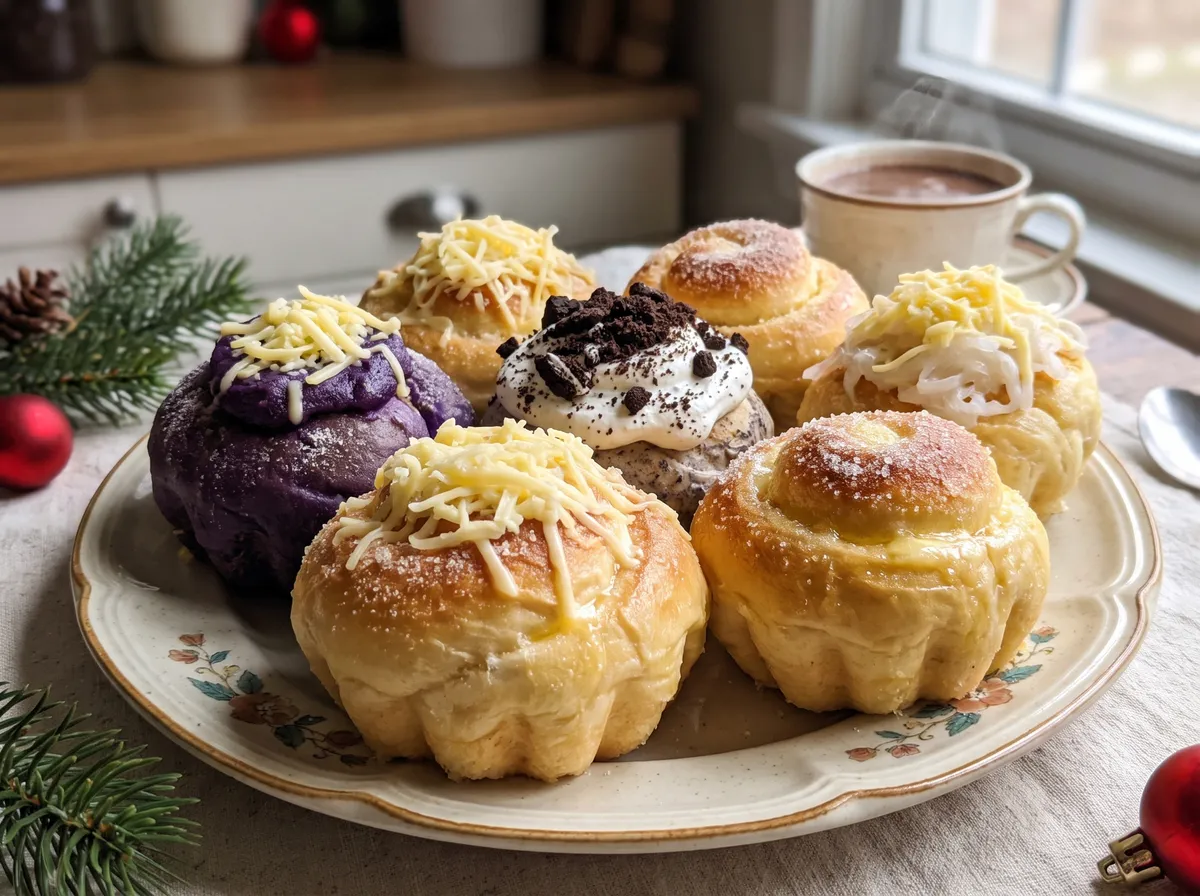
There's a particular kind of joy that comes from pulling apart a warm Ensaymada—watching the buttery spiral unravel in soft, pillowy layers, cheese flecks catching the light, a light dusting of sugar clinging to your fingertips before you even take the first bite. It's the kind of bread that makes grown adults a little bit giddy, the kind that transforms an ordinary merienda (afternoon snack) into something worth savoring.
Walk into any Filipino bakery—from humble neighborhood panaderias to glossy mall chains like Goldilocks and Red Ribbon—and you'll find Ensaymada prominently displayed, often in multiple varieties: classic, special (loaded with extra cheese and butter), ube-flavored, even savory versions with bacon or ham.
But here's what makes Ensaymada particularly fascinating: it's simultaneously one of the most recognizably "Filipino" baked goods and a direct descendant of a Spanish Mediterranean pastry. This tension between inherited tradition and local reinvention makes Ensaymada a perfect lens for understanding how Filipino cuisine actually works—not through pure invention, but through transformation.
So what exactly is this buttery, cheesy, sweet spiral bread? And why does it spark genuine debate about what "authentic" Filipino baking even means?
Let's unravel this one, layer by layer.
The Basics: What Exactly Is Ensaymada?
Ensaymada is a soft, sweet, spiral-shaped yeast bread, enriched with butter and eggs, traditionally topped with additional butter, sugar, and grated cheese.
The texture should be:
Light and fluffy, almost cloud-like
Rich from butter and egg content (significantly more enriched than regular bread dough)
Slightly sweet in the dough itself
Topped generously with a contrasting sweet-salty-buttery finish
The Essential Components
The Dough:
Flour (bread flour typically, for proper gluten development)
Yeast
Eggs (often multiple, contributing richness and color)
Butter (traditionally a generous amount)
Sugar
Milk
Sometimes a touch of salt to balance sweetness
The Shaping:
Rolled thin, then coiled into a spiral or sometimes braided before coiling
This technique creates the distinctive layered, pull-apart texture
The Toppings:
Butter (generously brushed on top while still warm)
Granulated sugar (sprinkled over the butter)
Grated cheese (traditionally quickmelt or edam cheese, sometimes Parmesan in "special" versions)
This combination of sweet and salty, soft bread and crunchy-sweet topping, is what makes Ensaymada instantly recognizable and genuinely craveable.
The Spanish Connection: Where Ensaymada Actually Comes From
To understand Ensaymada fully, we need to acknowledge its documented origins rather than treating it as a purely indigenous Filipino creation.
The Mallorcan Ensaimada
Ensaymada's direct ancestor is the ensaimada mallorquina (Mallorcan ensaimada), a pastry from the Balearic Islands of Spain, specifically Mallorca. The Spanish/Mallorcan version:
Uses lard (saïm in Mallorcan, hence the name "ensaimada") rather than butter traditionally
Is typically dusted with powdered sugar rather than granulated sugar and cheese
Has a flatter, more coiled snail-shell appearance
Doesn't traditionally include cheese at all
Can be plain or filled with cabello de ángel (candied pumpkin/squash thread filling)
The name itself comes directly from "saïm," the Mallorcan word for lard, which was the traditional fat used in the original recipe.
How It Traveled to the Philippines
During the Spanish colonial period (1565-1898), Spanish culinary traditions, including various breads and pastries, made their way to the Philippines through:
Spanish colonizers and their households
Religious orders establishing bakeries, particularly in convents
Trade connections and cultural exchange
Ensaimada was among the Spanish baked goods that took root in Filipino kitchens and bakeries, but like many colonial-era culinary transplants, it didn't remain static—it evolved based on local ingredients, tastes, and available resources.
The Filipino Transformation
Over generations, Filipino bakers transformed the original Spanish ensaimada into something distinctly different:
Lard to butter: As butter became more accessible and preferred, Filipino versions shifted away from lard, creating a different flavor profile and richness
Addition of cheese: This is perhaps the most significant Filipino innovation—adding grated cheese on top, creating that distinctive sweet-salty combination that doesn't exist in the original Spanish version
Sugar instead of powdered sugar: Filipino versions typically use granulated sugar, creating a different textural element (slight crunch) compared to the powdery Spanish original
Shape variations: While maintaining the coiled technique, Filipino Ensaymada often appears in a more rounded, bun-like shape rather than the flatter Mallorcan coil
This transformation represents genuine culinary innovation—Filipino bakers didn't simply copy a recipe; they adapted it meaningfully to local tastes and ingredient availability, eventually creating something that, while clearly related to its Spanish ancestor, stands as its own distinct food item.
The Authenticity Debate: Is Ensaymada "Really" Filipino?
This brings us to a genuine, ongoing conversation within Filipino food circles and food history discussions: how should we categorize dishes with clear colonial origins that have been significantly transformed?
The Case for "It's Spanish, Not Filipino"
Some food purists and cultural commentators argue:
The core technique, name origin, and basic concept remain fundamentally Spanish/Mallorcan
Crediting Ensaymada as "Filipino" erases the colonial history and the actual origin culture
Similar arguments apply to numerous other Filipino dishes with clear Spanish origins (morcon, embutido, etc.)
There's a pattern of former colonies claiming colonizer foods as their own without sufficient acknowledgment of origins
The Case for "It's Genuinely Filipino Now"
Other food historians and cultural observers argue:
Food evolves and belongs to the people who transform and sustain it, not just those who originated the base concept
The Filipino version differs significantly enough (cheese topping, butter instead of lard, different sugar application) to constitute legitimate innovation, not mere copying
Similar transformations happen throughout global cuisine—tomatoes in Italian food, chili peppers in Indian food, potatoes in Irish cuisine—all represent "foreign" ingredients or techniques that became inseparable from national culinary identity
The specific combination of flavors and the cultural context in which Ensaymada is consumed (as merienda, as pasalubong/travel gift, as Christmas treat) is distinctly Filipino regardless of originating technique
Demanding "purity" in food origins ignores how virtually all cuisines develop through exchange, colonization, trade, and adaptation
The Stance Worth Taking
The most historically honest and culturally productive position acknowledges both truths simultaneously: Ensaymada has clear, undeniable Spanish/Mallorcan origins, AND the Filipino version represents genuine culinary innovation significant enough to be considered its own distinct food tradition.
This isn't contradiction—it's historical accuracy. Pretending Ensaymada emerged independently without Spanish influence would be historically dishonest and would erase the real, complicated colonial history that shaped Filipino cuisine. But insisting that Filipino Ensaymada is "just" the Spanish version, unchanged and uncredited to Filipino innovation, ignores genuine, meaningful transformation.
The productive approach: Credit the origin clearly while celebrating the transformation. Filipino food writers and culinary historians should name the Mallorcan connection explicitly rather than presenting Ensaymada as if it appeared from nowhere, while also recognizing that what Filipino bakers created—particularly that cheese-butter-sugar topping combination—represents authentic innovation deserving of recognition as a distinctly Filipino food.
This approach matters beyond just Ensaymada. It establishes a more honest framework for discussing Filipino cuisine broadly, acknowledging the genuine complexity of a food culture shaped by indigenous traditions, centuries of Spanish colonization, American influence, Chinese trade relationships, and more—without either erasing colonial history or dismissively reducing everything to "just colonial leftovers."
Food can have complicated origins AND genuine cultural ownership simultaneously. These aren't mutually exclusive truths.
The "Special" Ensaymada Debate: How Much Topping Is Too Much?
Within the Philippines itself, there's a more lighthearted but still genuine debate about what constitutes a properly made "Special" Ensaymada versus regular versions.
Understanding the "Special" Designation
Most Filipino bakeries offer at least two tiers:
Regular Ensaymada: Standard butter, sugar, and modest cheese topping
Special Ensaymada: Significantly more generous portions of butter, sugar, and cheese, often priced higher
The Debate Points
The "more is better" camp argues:
The entire appeal of Ensaymada lies in its indulgent richness
Skimping on toppings misses the point of the pastry entirely
"Special" should mean genuinely special—generous, almost excessive toppping that makes the bread feel luxurious
Customers paying premium prices for "Special" versions deserve noticeably more topping, not marginal increases
The "balance matters" camp argues:
Excessive butter and cheese can overwhelm the bread's actual texture and flavor
The bread itself—properly made, soft, slightly sweet—deserves to be tasted, not just serve as a vehicle for toppings
Some commercial "Special" versions prioritize visual excess over actual flavor balance, creating a cheese-and-butter avalanche that becomes more about spectacle than genuine deliciousness
A well-made Ensaymada should have harmony between bread and topping, not topping dominance
Where This Lands
This remains a genuine matter of personal preference rather than an objectively "correct" answer, but it's worth noting that the commercial bakery industry has increasingly leaned toward the "more is better" interpretation, partly driven by social media culture where visually excessive, cheese-laden Ensaymada photographs perform well and drive sales.
Artisanal and smaller bakeries sometimes maintain more restrained, balanced approaches, arguing that this better honors the bread's actual craft rather than reducing it to a topping delivery system.
Neither approach is incorrect, but understanding this spectrum helps explain why Ensaymada experiences can vary so dramatically between different bakeries and why some people feel strongly that certain commercial versions have "lost the plot" by prioritizing Instagram-worthy excess over textural and flavor balance.
The Cheese Question: What Cheese Actually Belongs on Ensaymada?
This is a smaller but genuinely debated point among Filipino baking enthusiasts.
Traditional Choice: Quickmelt or Edam
The most traditional and widely used cheese for Ensaymada topping is:
Quickmelt cheese (a Filipino processed cheese product, similar to a mild cheddar-style melting cheese)
Edam cheese (a Dutch cheese that became popular in the Philippines, often used for its mild, slightly salty flavor and good grating/melting properties)
Modern and Premium Variations
Some bakeries, particularly those marketing "premium" or "artisanal" Ensaymada, have shifted toward:
Parmesan cheese (adding sharper, more pronounced umami flavor)
Combinations of multiple cheese types
Sometimes cream cheese incorporated into the topping for extra richness
The Debate
Traditionalists argue that the mild, slightly sweet, meltable qualities of quickmelt or edam cheese are specifically what Filipino Ensaymada calls for—creating that distinctive sweet-salty-mild flavor combination that defines the classic experience.
Critics of this traditional approach suggest that quickmelt cheese, being a processed product, lacks the depth and quality of actual aged cheeses like Parmesan, and that "upgrading" to better quality cheese improves the overall product.
The reasonable position: This is genuinely a matter of what you're trying to achieve. If you want the classic, nostalgic Filipino Ensaymada experience that generations have grown up with, quickmelt or edam delivers that specific flavor profile. If you're creating a more elevated, "premium" interpretation, Parmesan or other quality cheeses can create a genuinely delicious, if different, final product. Neither is objectively superior—they're pursuing different goals.
How Ensaymada Fits Into Filipino Food Culture
Beyond the bread itself, Ensaymada occupies specific cultural roles worth understanding.
Merienda Culture
Ensaymada is quintessential merienda food—the Filipino tradition of an afternoon snack/light meal, typically enjoyed around 3-4 PM, often accompanied by:
Hot chocolate (tsokolate, traditionally made from tableya/cacao tablets)
Coffee (kapeng barako or other local coffee varieties)
Sometimes fresh fruit juice
This merienda tradition reflects the Filipino approach to eating: not just three large meals, but multiple smaller eating occasions throughout the day that serve social and nutritional functions.
Pasalubong Tradition
Ensaymada frequently serves as pasalubong—gifts brought back from travels, typically food items meant to be shared with family and friends upon return. Specific regions and bakeries become known for exceptional Ensaymada, making them popular pasalubong choices:
Malolos, Bulacan: Often cited as having particularly good traditional Ensaymada
Various provincial bakeries develop local reputations
Manila-based chains like Goldilocks and Red Ribbon have become ubiquitous pasalubong options precisely because of their widespread availability and consistent quality
This pasalubong function transforms Ensaymada from mere food into a vehicle for maintaining family and social connections, especially important in a culture where extended family relationships and reciprocal gift-giving carry significant social weight.
Christmas and Celebration Food
While not as tightly bound to specific religious observance as Bibingka's Simbang Gabi connection, Ensaymada experiences significant seasonal spikes during:
Christmas season: Often featured in noche buena (Christmas Eve feast) spreads and given as gifts
Fiestas and celebrations: Appears alongside other special-occasion foods
Sunday family gatherings: Common merienda offering when extended family convenes
The Commercial Bakery Phenomenon
Understanding Ensaymada's modern identity requires acknowledging the significant role commercial bakery chains have played:
Goldilocks: Founded in 1966, became one of the most recognizable Filipino bakery chains, with their Ensaymada becoming a standard reference point for many Filipinos, particularly those who grew up with the brand's widespread availability.
Red Ribbon: Another major chain with significant Ensaymada presence, creating brand loyalty and comparison discussions among Filipino consumers about whose version is "better."
These commercial chains, while sometimes criticized by purists for mass-production approaches that may sacrifice some traditional qualities, have also played crucial roles in:
Making Ensaymada widely accessible across economic classes
Creating consistent quality that builds trust and nostalgia
Exporting Filipino Ensaymada awareness through international branch locations, introducing the pastry to broader global audiences
Making Ensaymada at Home: What You're Actually Getting Into
For those interested in attempting homemade Ensaymada, understanding the actual process illuminates why bakery versions carry premium pricing.
The Technical Challenges
Enriched dough complexity:
Ensaymada dough contains significantly more butter and eggs than basic bread dough, creating technical challenges:
Proper gluten development while managing high fat content
Achieving the right fermentation time for optimal flavor development
Managing dough temperature carefully (butter-heavy doughs are sensitive to overheating during mixing/kneading)
Shaping technique:
The spiral shaping method requires:
Rolling dough thin enough to create proper layers
Achieving even coiling for consistent baking
Managing dough elasticity without tearing
Baking precision:
Getting the right balance of golden-brown exterior while maintaining soft, properly cooked interior
Timing the topping application correctly (butter brushed while warm enough to partially melt, but not so hot it becomes greasy rather than absorbed)
Realistic Expectations
Home bakers attempting Ensaymada should expect:
Multiple attempts before achieving consistent, bakery-quality results
Significant time investment (proper enriched dough requires patient fermentation time, often 2+ hours minimum, sometimes overnight for best flavor development)
Ingredient costs that may rival or exceed bakery prices when using quality butter and proper ingredients
Learning curve for the specific shaping technique
This technical complexity explains why many Filipino families, even skilled home cooks who prepare elaborate dishes regularly, still prefer purchasing Ensaymada from trusted bakeries rather than attempting homemade versions regularly.
For Those Wanting to Try
Simplified approach for beginners:
Using a stand mixer with dough hook attachment (manual kneading of this enriched dough is genuinely difficult)
Starting with a well-tested recipe rather than improvising
Being patient with proofing times rather than rushing the process
Starting with smaller batch sizes to manage the learning curve
Ingredient quality considerations:
Using good quality butter (European-style, higher fat content butter often produces better results)
Fresh yeast or properly stored active dry yeast
Room temperature eggs for proper incorporation
Ensaymada Variations Worth Knowing
The basic Ensaymada concept has spawned numerous variations across the Philippines and in modern bakery innovation.
Traditional Variations
Ensaymada de Malolos: Often cited as a specifically excellent regional version from Malolos, Bulacan, sometimes considered a benchmark for traditional quality.
Plain Ensaymada: Without the cheese topping, closer to the original Spanish concept but still using butter rather than lard, representing a middle ground between original and modern Filipino versions.
Modern Innovations
Ube Ensaymada: Incorporating purple yam flavor and color into the dough itself, representing the broader trend of ube integration into Filipino baked goods.
Savory Ensaymada: Topped with ingredients like bacon bits, ham, or even incorporating savory fillings, moving away from the traditional sweet profile entirely.
Mini Ensaymada: Smaller, bite-sized versions designed for modern snacking preferences and portion control consciousness.
Ensaymada with Macapuno: Incorporating sweet coconut strings (macapuno) either as filling or topping addition, combining two beloved Filipino sweet ingredients.
The Innovation Question
As with the broader authenticity debate, these modern variations raise questions about how much innovation a food item can sustain while maintaining its core identity. Most food culture observers seem comfortable with sweet variations (ube, macapuno) as legitimate extensions of Ensaymada's identity, while savory versions sometimes generate more pushback from those who view the sweet-salty balance (specifically from cheese against sweet dough, not savory proteins) as essential to authentic Ensaymada character.
The Health Question: Nutritional Reality Check
Let's be honest about what you're actually consuming when you enjoy Ensaymada.
The Nutritional Profile
What's actually in Ensaymada:
Significant butter content (both in dough and topping)
Substantial sugar (in dough and topping)
Refined flour (limited fiber content)
Eggs (providing some protein)
Cheese topping (additional fat and some protein)
Caloric reality:
Ensaymada, particularly "Special" versions with generous toppings, ranks among the more calorie-dense Filipino baked goods, combining:
High fat content from multiple sources (butter in dough, butter topping, cheese)
Significant sugar content
Refined carbohydrate base
The Honest Context
Ensaymada was never intended as health food—it's explicitly an indulgent treat, traditionally reserved for:
Special merienda occasions rather than daily consumption
Celebrations and gift-giving
Occasional indulgence rather than dietary staple
This context matters for reasonable consumption expectations. Enjoying Ensaymada occasionally, as part of celebration or special treat tradition, aligns with both historical consumption patterns and reasonable dietary balance. Treating it as a daily breakfast or snack item represents a different relationship with the food than its traditional cultural role suggests.
For those monitoring caloric or sugar intake, understanding that "Special" versions with maximum toppings represent the higher end of the spectrum allows for informed choices—perhaps selecting regular versions or enjoying smaller portions while still participating in the cultural tradition.
Ensaymada's Place in the Broader Filipino Bread Landscape
Understanding Ensaymada benefits from comparing it to other Filipino bread traditions.
Pandesal: The Everyday Counterpart
While Ensaymada represents indulgent, special-occasion bread, Pandesal serves as the everyday Filipino bread staple:
Smaller, simpler, less enriched than Ensaymada
Typically unsweetened or only lightly sweet
Consumed daily by many Filipino families, especially for breakfast
Much more affordable, reflecting its everyday status
This contrast illustrates how Filipino bread culture encompasses both humble daily staples and elaborate celebration foods, each serving distinct purposes.
Other Spanish-Influenced Breads
Ensaymada isn't alone in representing Spanish colonial bread influence transformed into Filipino tradition:
Pan de Sal itself has debated origins connecting to Spanish bread traditions
Torta (various sweet bread/cake items) shows similar colonial-to-local transformation patterns
Monay (another bread variety) represents additional Spanish-Filipino bread fusion
Understanding Ensaymada within this broader context helps illustrate that it's not an isolated case of colonial transformation, but part of a larger pattern throughout Filipino bread-making traditions.
Why Ensaymada Matters Beyond Being Delicious
Food carries meaning beyond taste, and Ensaymada exemplifies several important dimensions of Filipino cultural identity.
A Case Study in Cultural Adaptation
Ensaymada offers a particularly clear example of how colonized peoples don't simply inherit colonizer culture passively—they actively transform it, creating new cultural products that, while acknowledging origins, represent genuine innovation and ownership. This pattern repeats throughout Filipino cuisine and culture more broadly, making Ensaymada a useful lens for understanding broader post-colonial cultural dynamics.
Economic Significance
The Ensaymada market represents significant economic activity:
Major bakery chains built substantial business around consistent Ensaymada production
Small, independent bakeries maintain livelihoods through specialized or regional Ensaymada varieties
The pasalubong tradition creates ongoing demand that supports bakery businesses, particularly in regions known for exceptional versions
Social Cohesion Through Food Gifting
The pasalubong tradition surrounding Ensaymada reinforces important Filipino social values around reciprocity, family connection, and maintaining relationships even across distance. The simple act of bringing Ensaymada back from a trip represents care, memory, and social obligation fulfillment in ways that transcend the food itself.
Diaspora Identity Maintenance
For Filipinos abroad, seeking out or attempting to recreate Ensaymada connects to broader patterns of using food to maintain cultural identity in diaspora contexts. The pastry's availability (or lack thereof) in various international locations often becomes a marker of how well-established local Filipino communities and businesses have become.
Ready to Experience Ensaymada? Here's Your Action Plan
If you're ready to explore this buttery, cheesy Filipino treasure, here's how to approach it thoughtfully.
For Those in the Philippines
Try multiple sources: Sample Ensaymada from commercial chains (Goldilocks, Red Ribbon), local neighborhood bakeries, and if possible, regional specialties like those from Malolos, to understand the range of quality and style variation.
Compare regular vs. special: Order both versions when available to understand your own preference regarding topping generosity.
Pay attention to freshness: Ensaymada is best enjoyed fresh, ideally same-day. The soft, fluffy texture that defines quality Ensaymada deteriorates relatively quickly.
Pair appropriately: Experience it properly with hot chocolate or coffee as part of genuine merienda tradition, rather than just eating it standalone.
For Those Abroad
Seek out Filipino bakeries: Many cities with significant Filipino populations have bakeries producing fresh Ensaymada, offering better quality than shipped or frozen versions.
Check Filipino grocery stores: Some carry frozen or packaged Ensaymada, though quality varies significantly from fresh-baked versions.
Consider the homemade route: If you have access to proper ingredients and are willing to invest the time, homemade Ensaymada can provide both the authentic experience and the satisfaction of mastering a technically challenging bake.
Connect with Filipino community events: Potlucks and celebrations often feature homemade Ensaymada from skilled home bakers within the community.
For the Truly Curious
Learn the full history: Understanding the Mallorcan origins alongside the Filipino transformation provides richer appreciation for what you're eating.
Explore variations thoughtfully: Try traditional, special, and modern flavor variations to understand the full range of what Ensaymada can be.
Respect the debates: Engage with the authenticity and preparation discussions as genuine cultural conversation rather than simple right-or-wrong determinations.
Document the experience: Whether through photos or simply mindful eating, properly experiencing fresh, well-made Ensaymada deserves attention and appreciation.
The Last Pull-Apart Bite
Ensaymada represents something genuinely fascinating about Filipino food culture: the ability to take inherited colonial influence and transform it into something that feels authentically, distinctly local while still honoring its complicated origins.
This isn't a simple story of pure invention, nor is it merely colonial copying—it's the more nuanced, more interesting reality of how food cultures actually develop through exchange, adaptation, and genuine innovation. The Spanish Mallorcan ensaimada provided a foundation; Filipino bakers, over generations, built something new on top of it.
Whether you're biting into a classic version from your neighborhood panaderia, splurging on a "Special" loaded with extra cheese and butter, or attempting the technically challenging homemade version yourself, you're participating in this layered history every time you enjoy Ensaymada.
The next time you pull apart those soft, buttery spirals and taste that distinctive sweet-salty-rich combination, you'll understand you're not just enjoying a tasty treat—you're tasting centuries of cultural exchange, colonial history, and genuine Filipino culinary creativity, all wrapped up in one irresistible pastry.
Welcome to the rich, complicated, absolutely delicious world of Ensaymada. May your next piece be fresh, properly buttery, and shared with people who appreciate it as much as you do.
Keep the Filipino Food Journey Going
Want to share the joy of Filipino food culture with the little ones in your life?
Our Filipino Food Coloring Book brings beloved dishes like Ensaymada, Bibingka, Ginataang Kalabasa, Pancit Mami, and more to life through beautiful illustrations that kids (and kids at heart) can color and learn from. It's a fun, creative way to introduce Filipino culinary heritage to the next generation while celebrating the foods that connect us to our roots.
Each page features a different iconic Filipino dish with educational tidbits that make learning about culture delicious and engaging. Perfect for Filipino families wanting to pass down food traditions, educators teaching about diverse cultures, or anyone who loves Filipino food and wants to celebrate it in a creative way.
Get your Filipino Food Coloring Book here and start a colorful conversation about the foods that make Filipino culture so special.
Have you tried Ensaymada? Are you Team Classic or Team Special with extra everything? Goldilocks or Red Ribbon? Or maybe you have a favorite local bakery version? Share your Ensaymada preferences and memories in the comments below!
For more deep dives into Filipino food culture, check out our explorations of Taho, Bibingka, Goto, and Pancit Mami, and subscribe to stay updated on future posts celebrating the foods that connect us to home, history, and each other.
References and Further Reading
To ensure accuracy and depth in exploring Ensaymada's history and cultural significance, this article drew from various sources on Filipino culinary history, Spanish colonial food influence, and bread-making traditions:
On Ensaymada and Mallorcan Origins:
Fernandez, Doreen G. Tikim: Essays on Philippine Food and Culture. Anvil Publishing, 1994.
"Ensaimada: The Original Mallorcan Pastry." Spain.info, Spanish tourism cultural resources.
Alejandro, Reynaldo. The Philippine Cookbook. Penguin Books, 1985.
On Spanish Colonial Influence in Filipino Cuisine:
Fernandez, Doreen G. "Food and the Filipino: Essays." Various compilations on Spanish colonial culinary impact.
Civar, Felice Prudente Sta. Maria. The Governor-General's Kitchen: Philippine Culinary Vignettes and Period Recipes 1521-1935. Anvil Publishing, 2006.
"Spanish Influence on Filipino Food Culture." Philippine Star, culinary history features.
On Filipino Bakery Traditions:
"The History of Filipino Panaderias." Esquire Philippines, culinary heritage articles.
Gelle, Ging. Salo-Salo: Recipes and Stories from the Filipino Kitchen. HarperCollins, 2022.
"Goldilocks: The Story Behind the Filipino Bakery Icon." Goldilocks official company history.
On Merienda Culture and Food Traditions:
"Understanding Merienda: The Filipino Afternoon Food Tradition." Positively Filipino, cultural essays.
Matejowsky, Ty. Fast Food Globalization in the Provincial Philippines. Lexington Books, 2018.
On Post-Colonial Food Culture and Identity:
Manalansan, Martin F. "Beyond Authenticity: Rerouting the Filipino Culinary Diaspora." Eating Asian America: A Food Studies Reader, NYU Press, 2013.
"Food, Colonialism, and Cultural Identity in the Philippines." Journal of Southeast Asian Studies, academic analysis.
On Pasalubong Traditions:
"Pasalubong: The Filipino Tradition of Bringing Home Treats." Rappler, cultural features.
"Regional Specialties: Malolos Ensaymada and Beyond." Choose Philippines, regional food guides.
On Bread Science and Baking Technique:
"Understanding Enriched Dough: Technique and Science." King Arthur Baking Company, educational resources.
"The Art of Laminated and Spiral Breads." Serious Eats, baking technique analysis.
Nutritional Information:
United States Department of Agriculture (USDA) FoodData Central. Nutritional profiles for enriched bread, butter, and cheese toppings.
"Nutritional Analysis of Traditional Filipino Pastries." Food and Nutrition Research Institute, Philippines.
Cultural and Contemporary Sources:
Field observations and documentation of Filipino bakery practices and product variations
Contemporary Filipino food blogs and baking communities
Filipino diaspora bakery businesses and their adaptation practices
Culinary historical research on colonial-era food transformation in Southeast Asia
This article represents a synthesis of published research, documented historical connections, and ongoing conversations within Filipino food and culinary history communities both in the Philippines and globally. As with all discussions of food origins and cultural ownership, the perspectives explored here reflect genuine, ongoing scholarly and popular debate rather than settled, uncontested conclusions.